
Strategic collaboration aims to standardise advanced packaging and chiplet integration to bridge the gap between pilot-line innovation and mass production.
The Global Electronics Association has signed a Memorandum of Understanding (MoU) with the Fraunhofer Group for Microelectronics to accelerate the transition of advanced packaging technologies from research environments to commercial manufacturing. The partnership focuses on the European Union’s APECS pilot line—a major initiative for advanced packaging and heterogeneous integration under the EU Chips Act. Coordinated by the Fraunhofer-Gesellschaft, APECS is implemented through Research Fab Microelectronics Germany (FMD), a research cross-collaboration uniting 13 Fraunhofer institutes alongside the Leibniz institutes FBH and IHP.
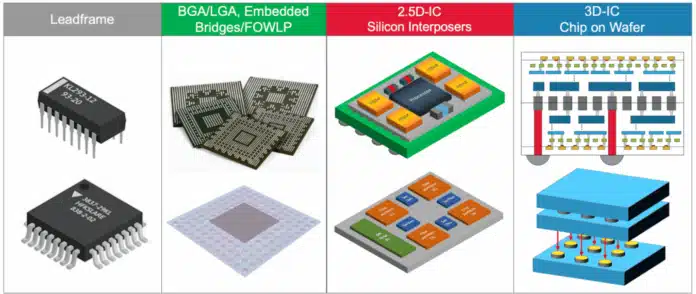
By combining APECS’s pilot-line capabilities across 2.5D/3D integration and chiplet-based modules with the Global Electronics Association’s expertise in industry standards, the initiative addresses critical scaling challenges in design, assembly, testing, and data exchange. A key priority is System-Technology Co-Optimization (STCO), an approach that aligns materials, circuit design, and assembly processes early in the development lifecycle to build practical scaffolding across the global supply chain.
Matt Kelly, Chief Technology Officer at the Global Electronics Association, noted: “Our silicon to systems approach, spanning design, materials to system-level packaging, maps to the reality that advanced packaging changes the rules for everyone, not just one segment of the supply chain. Collaborations like this are about building the practical scaffolding – guidelines, standards, tools and training – that helps suppliers qualify, customers specify, factories operate and regulators trust.”
Dr Dirk Schumann, Director of the APECS pilot line, added: “APECS connects design, advanced packaging, assembly, testing and reliability across a European pilot line infrastructure. For these capabilities to translate into industrial use, technical development also needs to reflect standards, manufacturing practices and common interfaces early in development. The collaboration with the Global Electronics Association adds a direct industry perspective on the requirements that matter as technologies move toward scalable manufacturing.”