
Indian medical industry is growing at a fast pace and has made a mark in the global market as well. According to an Indian Semiconductor Association (ISA) report, the Indian medical electronics market is valued at Rs 38.5 billion (Rs 3850 crore), a component of the overall Indian healthcare market of Rs 3000 billion (Rs 300,000 crore).
By Srabani Sen
 Saturday, August 20, 2011: This growth is taking place due to some key factors that are unique to this country, like changing demographics and age profiles, which necessitate spending more on healthcare; rise in lifestyle diseases and need for their diagnosis; need to fill the gap in healthcare infrastructure through public-private partnership; growth in medical tourism to address international needs; entry of corporate houses into the healthcare arena; and increase in healthcare spending due to an increase in healthcare insurance coverage.
Key growth area
According to Dr Vidya Mulky, head, research, ISA, “By the end of 2015, the medical equipment electronics market is estimated to grow at a CAGR of 17 per cent to reach around US$ 2 billion from US$ 0.8 billion in 2009. Annually, medical equipment worth US$ 520 million (Rs 24.5 billion or Rs 2450 crore) is manufactured in India, out of which US$ 75 million (Rs 3.5 billion or Rs 350 crore) is exported.
The growth of the medical equipment market is directly proportionate to the growth in healthcare delivery, which stood at US$ 45.36 billion (Rs 2160 billion or Rs 2,16,000 crore) in 2009. Siemens, Wipro GE and Philips are the leaders in the space with a market share of 18 per cent, 17 per cent and 10 per cent, respectively. However, 45 per cent of the market is addressed by smaller, niche domestic players like Medived Innovations Pvt Ltd, Roche Diagnostics India, British Physical Laboratories India Pvt Ltd (BPL), Opto Circuits India Ltd, etc.
Opportunities abound
The medical equipment sector offers huge opportunities for businesses. “With the arrival of nanotechnology, telemedicine and innovative semiconductor devices, the industry is well poised to help India leapfrog onto a new level of quality healthcare by driving the affordability and accessibility factors,” said Vivek Sharma, regional VP, Greater China and South Asia, India Operations, ST Microelectronics, who is also the ISA convener for the medical electronics segment. However, currently, the manufacture of medical electronics devices is negligible in India and most of the country’s requirements are imported from markets like the US and Europe.
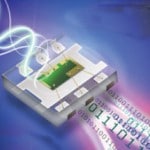
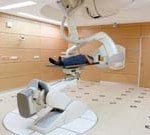
Semiconductors are an integral part of most medical equipment, starting from high end imaging to small handheld devices. Interestingly, the role of semiconductor components becomes more critical as medical devices become smaller and more portable. Nevertheless, imaging and monitoring systems (MRI systems, CT scanners, X-ray machines, blood pressure monitors and ECG machines), digital hearing aids and infusion pumps are the primary drivers of semiconductor use in medical electronics technology. Widely used semiconductor components in medical equipment include microcontrollers, amplifiers, sensors, digital signal processors (DSPs) and application specific integrated circuits (ASICs).
Currently, most medical equipment manufacturers in India rely on imported semiconductors. However, it is estimated that in three to four years, Indian suppliers will be able to meet the indigenous industry’s demand.
Looking ahead
In the next few years, demand for quality healthcare infrastructure will increase several times over, which will boost domestic manufacture of medical equipment in India. We will also see an increase in investments in terms of capital and R&D resources in this space. But India needs to create a suitable environment for the local manufacture of medical electronics equipment and to boost R&D.
Industry analysts believe that to shape the future of the medical electronics industry in India and to make it cost effective, there is a need to wean ourselves away from obsolete technology and adopt global best practices. The government should also promote export based medical equipment manufacture.
It is high time that the government encourages domestic manufacturing in this sector. It can encourage foreign collaborations, and special economic zones can be provided for medical device manufacturers. It also needs to bring in stringent quality standards for the industry so that Indian medical devices can compete globally.
Electronics Bazaar, South Asia’s No.1 Electronics B2B magazine