
The IIIT-H research focuses on non-LiDAR technology using cameras, image sequences and 3D foundational models for navigation
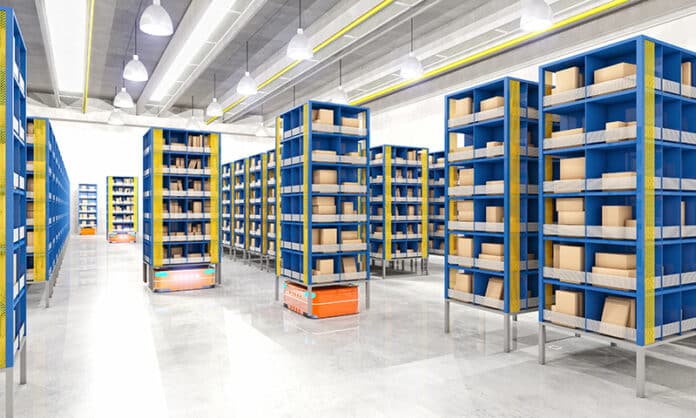
The Robotics research Centre (RRC) at The International Institute of Information and Technology, Hyderabad, (IIIT-H) has partnered with Ati Robotics, for three years to deploy AI-based navigation technology for autonomous robots in warehouses.
The IIIT-H research focuses on non-LiDAR technology using cameras, image sequences and 3D foundational models for navigation. The approach replaces the use of dense LiDAR maps with sparse localization, which estimates a robot’s position with limited data or landmarks.
According to Professor Madhava Krishna, this involves decomposing indoor settings in warehouses into landmark scenes like “next to the door” or “opposite to the elevator”, etc. Another method is to use image-based navigation where the robots use visual information to guide movement towards a pixel-indicated destination.The AI model uses two images of the same area to identify corresponding real world spots and their approximate 3D distances. It determines optimal navigational paths based on a cost image instead of conventional 3D coordinated maps.
The line of research has been going on at IIIT-H since 2023. According to Professor Sourav Garg of RRC, it seeks to understand how humans navigate using topology, semantics and local geometry. The work has been published on forums like IEEE conference of Robotics and Automation.
The team has transferred the code to Ati Robotics to deploy in warehouse environments. The robotics company stated that its focus is on the ‘last two meters’ of robot movement, which involves docking, approaching pallets, or threading narrow bays to enhance the efficiency of robots. Ati Robotics has evolved IIT-H’s model into OccupancyReact, a LiDAR based variant for its deployed solutions.