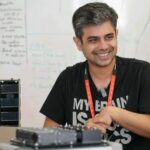

Leveraging STMicroelectronics’ deep understanding of client and market needs, Carlo Bozotti, president and chief executive officer, STMicroelectronics (ST), has forged a number of strategic alliances with key customers in different market segments. More recently, as part of his strategic efforts to build scale for the company in several businesses, Bozotti has engineered joint ventures with other industry leaders including spinning off ST’s Flash memory business, which has subsequently become part of a leading broadline memory supplier, and the creation of ST-Ericsson, a joint venture between STMicroelectronics and Ericsson. In a conversation with Rahul Chopra of Electronics Bazaar, Bozotti reveals ST’s strategy for India and talks about the opportunities he sees in the country.
EB: How satisfied are you with the performance of ST over the last year?
Overall, Q1 was a solid quarter of financial performance for ST. On a year-over-year basis, both total revenue and gross margins were high. All other areas of our product portfolio performed as expected, even slightly better. Our operating profitability also progressed over that of last year. This demonstrated the momentum we are seeing with our new products and the success with the expansion of our customer base as we address critical blocks, thus helping to drive our customers’ success.
Our R&D investments helped us demonstrate more and more innovations in our product portfolio, and our marketing and sales initiatives have been equally well focused as we engage with more industry leaders as customers.
EB: How important is Asia as a market for ST in terms of its revenue share?
Asia plays a strategic role in the overall progress of ST. We have two of our four regions—Greater China and South Asia (GC&SA), apart from Japan and Korea—based out of Asia. GC&SA is the largest region in terms of revenue and is showing strong growth. These two regions in Asia, put together, contribute more than 60 per cent of ST’s worldwide revenues.
Apart from revenues, ST has deeply invested in Asia. We have 24,000 employees in GC&SA (including ST-Ericsson), which represents a little less than 50 per cent of our global workforce. Our presence in Asia constitutes three R&D centres (in India, China and Singapore), four backend facilities (in China, Malaysia and Philippines), and sales and marketing offices along with multiple application labs to support our customers. More than half of our front-end manufacturing volumes are produced in Singapore, and 75 per cent of our test and packaging output is derived from GC&SA.
EB: How important is the Indian market for ST? Where does it rank in terms of sales amongst Asian countries?
In the last few years, India has emerged as a high growth market for ST. In order to understand the Indian semiconductor scenario in the world context, let us have a look at the local numbers. As per industry estimates, domestic semiconductor consumption is estimated to be in the range of US$ 6-7 billion and roughly half of it constitutes the locally available market. This represents 2-3 per cent of the total semiconductors consumption, worldwide. Knowing that more than 17 per cent of the world population lives in India, this offers a huge opportunity as the country marches on its journey of economic growth. No doubt, the domestic market has started to grow at a fast pace.
In line with the above statistics, at present, India represents 3-4 per cent of ST’s worldwide revenues. We believe we are among the top three semiconductor suppliers in India, and have a strong presence in the emerging segments like set top boxes, digital TVs, wireless, power applications, energy meters, smartcards, etc. Other applications areas like healthcare, automotive, security, e-governance and education offer high potential for our future growth.
EB: Does ST see India as a global marketing platform, which provides access to design engineers, or as a sales destination?
We have a two-fold strategy in India. First, to capitalise on the R&D capabilities of the rich pool of engineering talent available in the country to design and develop semiconductor solutions, including system-on-chip, embedded software, IP and reference applications, and other cutting edge technologies that impact lives globally.
Keeping that in mind, we set up our design centre operations in 1987. Today, we have a 2200 strong workforce in India (including STEricsson’s headcount), with 95 per cent being engineers.
The second focus area is to leverage the huge potential of the domestic markets, and actively contribute in driving the growth of local businesses in major segments such as digital consumer devices, energy, communications, automotive, etc, as well as new high growth industries that are emerging across India. With the rapid rise of the local economy, the semiconductor market in India is experiencing strong growth and we are enthusiastic to tailor our solutions for local consumers.
EB: With respect to the future growth of ST in India, where do you see the opportunities?
In line with our strategy in India, we aim to leverage the expertise of our engineers to develop innovative semiconductor solutions for our global markets. We also aim to focus on the large opportunities offered by the fast growing local markets, and position ourselves well in areas such as digital consumer devices, power and lighting, e-governance, security, automotive, healthcare, and space and aviation.
Our joint venture—STEricsson—is well positioned to exploit the huge domestic market for mobile phones and other wireless devices.
EB: What are some of the cutting edge technologies ST is working on presently?
In 2011, our priority is to achieve breakthroughs with a number of innovative products, including system-on-chips for 3D and connected TVs; microcontrollers based on power PC architecture for automotive applications; ‘twin MEMS’—combining gyroscopes and accelerometers, as well as active microphones and pressure sensors; advanced analogue products; and the U8500 Smartphone platform and the thin modem coming from ST-Ericsson.
Today, ST is much better positioned to achieve worldwide leadership in the two broad application areas that form the pillars of our vision—‘sense and power’ and ‘multimedia convergence’. And, we are also well positioned to address the four key growth application areas that we are targeting—smart consumer devices, energy management and energy saving, healthcare and wellness, and trust and data security.