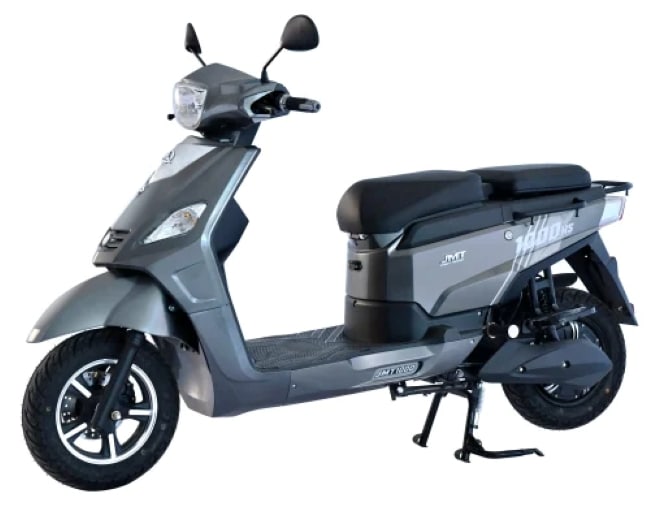

Jitendra EV Plans Sodium-Ion E-2Ws In Two Years

Sodium-ion batteries primarily use table salt and forest industry biomass, making them more readily available domestically.

Jitendra New EV Tech, an electric two-wheeler manufacturer based in Nashik and focused on Tier 2 and Tier 3 markets, is planning to launch vehicles powered by indigenously developed sodium-ion batteries by the end of Calendar Year 2025 or early Calendar Year 2026, as stated by co-founder Samkit Shah. Shah mentioned that the company is in discussions with 2-3 major Indian companies exploring sodium battery technology. He emphasized that these sodium batteries, to be manufactured in India, will complement the sodium cells currently sourced from China.

Shah’s comments come in the context of India’s transition to electric vehicles (EVs). Sodium-ion batteries are emerging as a viable alternative to the commonly used lithium-ion batteries in EVs, offering easier sourcing within the country. The main raw materials for sodium-ion batteries are table salt and biomass from the forest industry, enhancing their domestic accessibility. While global leaders in sodium battery development are primarily in China, India is also making significant advancements. In December, Pune-based KPIT Technologies, which collaborates with automakers on software integration, showcased its sodium-ion battery technology at an industry event in Bengaluru.

Regarding uncertainties surrounding subsidies for electric two-wheelers, Shah expressed confidence that the Indian electric two-wheeler industry is set to grow. However, he noted that achieving the government’s ambitious target of 35-40% penetration by 2030 might necessitate an extension of current subsidies. He suggested that without continued subsidies, the target might be delayed by at least a year.

Earlier this month, the Ministry of Heavy Industries introduced the Electric Mobility Promotion Scheme 2024 to continue providing subsidies for electric two and three-wheelers. The scheme, with a total allocation of Rs 500 crore, will be effective from April 1 to July 31. It aims to ensure incentives for electric two and three-wheelers following the expiration of the second phase of the Faster Adoption and Manufacturing of (Hybrid and) Electric Vehicle (FAME) scheme on March 31.

- Advertisement -

The FAME II scheme, launched in 2019 with a budget of Rs 10,000 crore for three years ending in 2022, was extended to March 2024. Last month, the budget for FAME II was increased by an additional Rs 1,500 crore. The government stated that subsidies under the scheme would apply to vehicles sold until March 31 or until funds are exhausted, whichever comes first. So far, the scheme has provided subsidies to approximately 1.47 million electric vehicles, including 1.30 million two-wheelers, 150,613 three-wheelers, and 18,794 four-wheelers.


- Advertisement -
Loading form…
Aryaman Raghuvanshi
Aryaman Raghuvanshi
Aryaman Raghuvanshi is a Journalist at EFY. His passion is to explore the future of mobility, which gets him to cover latest technologies shaping the future of automobiles and EVs. But, at times he writes on broader technologies too. LinkedIn: https://www.linkedin.com/in/aryaman-raghuvanshi-2431b7153

Industry's Buzz

SK Hynix

SK Hynix Backs Optical Interconnects for AI

0
South Korean memory maker backs co-packaged optics to replace copper links and break the 'AI memory wall' in data centres.  South Korean semiconductor giant SK...
Representational image of a satellite

Finnish SAR Imagery Specialist Forms Its India Unit

0
The formation of ICEYE India follows the formation of its German subsidiary last month. The move aims to tap into, what the company describes...
Nexperia

Europe-China Differences Leads to a Split in Nexperia

0
The Dutch chipmaker’s China unit said that a new production line which will produce 12-inch silicon wafer up to 100 percent domestically will be...

Kaynes Technology, BOSGAME Sign MoU To Expand In India

0
The partnership will also explore opportunities for product localisation, value addition, and greater participation in India’s growing electronics ecosystem Kaynes Technology India Limited and BOSGAME...
Piyush Goyal, Minister of Commerce and Industry, Government of India

India, Japan to Deepen Semiconductor and AI Cooperation During Goyal’s Visit 

0
Dedicated semiconductor and AI discussions will anchor Piyush Goyal’s Japan visit, with India seeking greater Japanese investment and technology partnerships. Union Commerce and Industry Minister...

Learn From Leaders

(L-R) Nikesh Gondchawar, Strategic & Technical Advisor – Robotics Manufacturing; Shrikrushna Kakade, Founder Partner; Nikhil Kakade, Senior Technical Advisor – Robotics & Control Systems, SlightGen Solutions LLP

“A Made-In-India Robotic PCB Soldering System That Automates The Through-Hole Soldering Process!” – Shrikrushna...

0
Electronics manufacturing is complex, and automation often comes at a high cost. To bridge this gap and offer a more affordable solution in India,...
Navdeep Narula, Executive Director, Client and Endpoint Solutions, Ingram Micro, India

“Enterprise Computing Is Shifting From CPU to GPU And Now Toward NPU-Based Systems ”...

0
The shift from CPU to GPU to NPU-based computing is redefining today’s enterprise endpoints. In an exclusive conversation, Navdeep Narula from Ingram Micro discusses...

India’s Robotics Push Opens New Hardware Opportunities

0
How do you build India’s physical AI future when critical robot components still come from overseas? Niqo Robotics reveals where the gaps remain.  India’s push...
Gadhadar Reddy, CEO and Founder, NoPo Nanotechnologies

How A Material Thinner Than Human Hair Could Transform EV Batteries And Electronics –...

0
What if a material 200,000 times thinner than a human hair could transform EV batteries, semiconductors, and advanced electronics? NoPo Nanotechnologies is making that...
Raja Rajeev Kumar, Mentor at IIT Startups, Chairman of the Board of Trustees, LaxmiRamaVarma Holdings International, and Founder and CEO, ChromoSoul Ventures

“Build Strong Startups, and Funding Will Follow”- Raja Rajeev Kumar, IIT Startups, LaxmiRamaVarma Holdings...

0
While AI and software startups attract attention and capital, electronics ventures often struggle for both. Raja Rajeev Kumar from IIT Startups, LaxmiRamaVarma Holdings International...

Startups

(L-R) Sri Kusulu Devalla, Co-Founder and Hetendra Singh Rathore, Founder, Segritech

“We don’t just sort fruit; we match every quality grade with the right buyer.”...

0
An agritech startup has developed an AI-powered machine that sorts and grades fruits directly on farms, helping reduce post-harvest losses by connecting produce with...
Akshar Vastarpara, Founder and CEO, Vicharak

“Our SBCs Are Designed As Complete Edge-Computing Platforms That Combine Everything On A Single...

0
An Indian startup builds affordable edge AI boards for robots, drones, and industry, positioning them as Raspberry Pi alternatives. In an EFY interview with...
Dr Naveen Yanduru, CEO, Axiro Semiconductor Private Limited

“India Can Lead In IP—If It BacksIts Own Builders”

0
Axiro Semiconductor designs RF and satellite chips, ships millions worldwide, and retains its startup mindset while tackling complex technical challenges. In a conversation with...
Dr Sanjay Ahuja, Founder and CEO of Cionlabs, India

“We are solving India-specific challenges rather than offering generic ‘black box’ IoT solutions.”

0
From hybrid mesh networking to AI-enabled edge devices, an Indian IoT startup is developing home-grown solutions to improve connectivity, strengthen privacy and support the...
RTLS

Amimotion’s World-Smallest UWB Tags That Give Factories A Digital Nervous System For Physical AI

0
A Bengaluru startup is turning factories into intelligent spaces with tiny UWB tags, AI-powered visibility, and real-time tracking that can automate workflows, improve safety,...