MPMS: Approximately a $7 Billion Scheme to Boost Mobile Phone Manufacturing

The scheme aims to double domestic production from $78.3 billion, under the previous scheme to $156.7 billion. Any existing brand must meet the minimum standard of $522.4 million and above the total sale of FY 2026 to be eligible for benefits under the scheme.
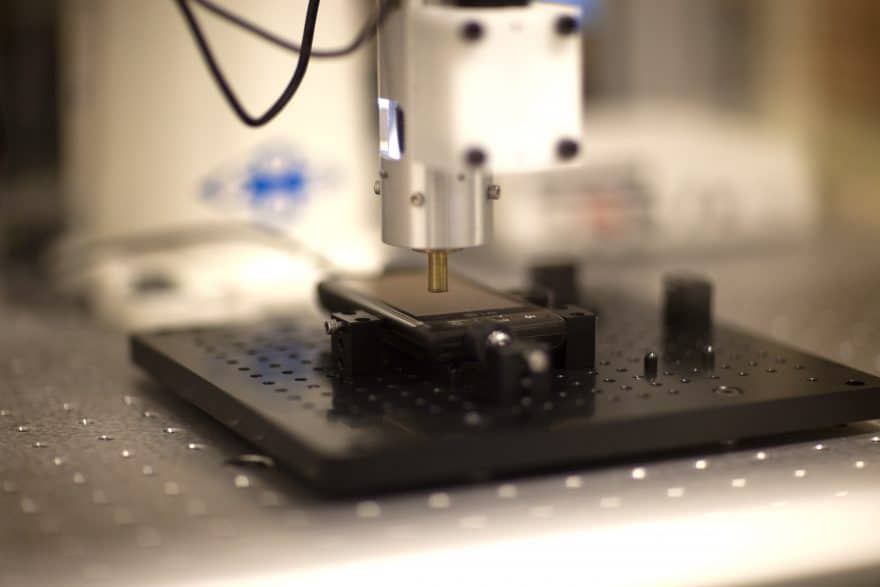
Mobile phone Manufacturing

The recently notified mobile phone manufacturing scheme (MPMS), aims to boost domestic value addition (DVA), reduce dependencies on supply chain, and develop homegrown brands through a funding of ₹62,500 crore (almost $7 billion).

The scheme is also expected to help aggregate demand in the electronic component manufacturing scheme (ECMS), and develop an efficient ecosystem for the same.

MPMS is divided into two target segments: Target segment-1 (TS1) and Target segment-2 (TS2). TS1is for bigger mobile phone or electronic component manufacturers with an annual turnover of $1.04 billion in FY 2026. While TS2 is for companies and manufacturers with a 51 percent Indian ownership and a turnover of $104.5 million.

MPMS, which will be applicable from this fiscal year for the next five years, is introduced after the expiry of the mobile PLI scheme. Brands with Indian ownership will get a one year gestation period.

- Advertisement -

“The Mobile Phone Manufacturing Scheme (MPMS) is expected to build on the success of the earlier scheme, with mobile phone production increasing 33X and mobile phone exports increasing 165X in FY26 as compared to FY15,” said Prashant Singhal, telecom and clients & industries leader, EY India, in a statement. 

Singhal added that the scheme will provide greater incentives for domestic value addition, promote backward integration and help reduce supply chain dependencies. 

The scheme provides 1.5 percent additional incentive for localising critical sub-assemblies such as camera modules, display assemblies, mechanics and battery cells, alongside a 3 percent incentive for domestic R&D and product design under TS2.

MPMS aims to double domestic production from $78.3 billion (₹7.5 lakh crore), under the previous scheme to $156.7 billion (₹15 lakh crore). Any existing brand is supposed to meet a minimum threshold of $522.4 million (₹5000 crore) of sales in FY26, to avail benefits under the scheme.

A new brand can only avail the benefits after scoring a total annual sales target of $1.04 billion. The incentive amount will be eligible sales in a financial year multiplied by the incentive rates, 2.75% in FY27 and FY28, 2.5% in FY29 and FY30, and 2.25% in FY31. 

Presently India’s smartphone market is dominated by Chinese brands like Oppo, Vivo, Xiaomi and others. Noida based Lava, is the only homegrown brand but faces tough competition from the rivals.


- Advertisement -
Loading form…
Jaydeep Gadhavi
Jaydeep Gadhavi
Jaydeep Gadhavi is a journalist with EFY business focusing on EV as well as Semiconductor business news.

Industry's Buzz

Anoop Kumar Rai Takes Charge as BEL Director (Marketing)

0
Beyond defence applications, Rai has driven BEL’s diversification into civilian infrastructure Bharat Electronics Limited (BEL) has appointed Anoop Kumar Rai as its Director (Marketing), effective...

BEL Appoints Ambrish Tripathi as Director (Human Resources)

0
Tripathi’s appointment comes as BEL continues to expand its capabilities across defence and strategic technologies Bharat Electronics Limited (BEL) has appointed Ambrish Tripathi as Director...

Suzlon Adds 250 MW Torrent Order, Crosses 1.1 GW in FY27 Orders 

0
Suzlon has secured a 250 MW wind energy order from Torrent Green Energy, taking their cumulative partnership to more than 1.3 GW across three...
Chip Making (representational Image)

India to Revise Semiconductor Rules Within Two Months, Says Piyush Goyal 

0
The planned changes aim to simplify approvals and make it easier for semiconductor manufacturers to source equipment and components from global suppliers.  India will amend...

North American EMS Book-to-Bill Ratio Rises to 1.29 in July 2026

0
The Association cautioned that month-to-month movements can be affected by seasonality and short-term volatility The North American electronics manufacturing services (EMS) sector recorded a book-to-bill...

Learn From Leaders

(L-R) Nikesh Gondchawar, Strategic & Technical Advisor – Robotics Manufacturing; Shrikrushna Kakade, Founder Partner; Nikhil Kakade, Senior Technical Advisor – Robotics & Control Systems, SlightGen Solutions LLP

“A Made-In-India Robotic PCB Soldering System That Automates The Through-Hole Soldering Process!” – Shrikrushna...

0
Electronics manufacturing is complex, and automation often comes at a high cost. To bridge this gap and offer a more affordable solution in India,...
Navdeep Narula, Executive Director, Client and Endpoint Solutions, Ingram Micro, India

“Enterprise Computing Is Shifting From CPU to GPU And Now Toward NPU-Based Systems ”...

0
The shift from CPU to GPU to NPU-based computing is redefining today’s enterprise endpoints. In an exclusive conversation, Navdeep Narula from Ingram Micro discusses...

India’s Robotics Push Opens New Hardware Opportunities

0
How do you build India’s physical AI future when critical robot components still come from overseas? Niqo Robotics reveals where the gaps remain.  India’s push...
Gadhadar Reddy, CEO and Founder, NoPo Nanotechnologies

How A Material Thinner Than Human Hair Could Transform EV Batteries And Electronics –...

0
What if a material 200,000 times thinner than a human hair could transform EV batteries, semiconductors, and advanced electronics? NoPo Nanotechnologies is making that...
Raja Rajeev Kumar, Mentor at IIT Startups, Chairman of the Board of Trustees, LaxmiRamaVarma Holdings International, and Founder and CEO, ChromoSoul Ventures

“Build Strong Startups, and Funding Will Follow”- Raja Rajeev Kumar, IIT Startups, LaxmiRamaVarma Holdings...

0
While AI and software startups attract attention and capital, electronics ventures often struggle for both. Raja Rajeev Kumar from IIT Startups, LaxmiRamaVarma Holdings International...

Startups

(L to R) C2i Semiconductors Founders—Vikram Gakhar, Founder & Director, Mixed Signal; Preetam Tadeparthy, Founder, CTO, VP, Engineering; Ram Anant, Founder & CEO; B.S. Dattatreya, Founder & Director, Power

Bengaluru Startup Targets AI Data Centre Power Delivery

0
C2i is building power systems that can help AI servers use electricity more efficiently and reliably. Two friends, Ram Anant and Preetam Tadeparthy, were working...
(L-R) Sri Kusulu Devalla, Co-Founder and Hetendra Singh Rathore, Founder, Segritech

“We don’t just sort fruit; we match every quality grade with the right buyer.”...

0
An agritech startup has developed an AI-powered machine that sorts and grades fruits directly on farms, helping reduce post-harvest losses by connecting produce with...
Akshar Vastarpara, Founder and CEO, Vicharak

“Our SBCs Are Designed As Complete Edge-Computing Platforms That Combine Everything On A Single...

0
An Indian startup builds affordable edge AI boards for robots, drones, and industry, positioning them as Raspberry Pi alternatives. In an EFY interview with...
Dr Naveen Yanduru, CEO, Axiro Semiconductor Private Limited

“India Can Lead In IP—If It BacksIts Own Builders”

0
Axiro Semiconductor designs RF and satellite chips, ships millions worldwide, and retains its startup mindset while tackling complex technical challenges. In a conversation with...
Dr Sanjay Ahuja, Founder and CEO of Cionlabs, India

“We are solving India-specific challenges rather than offering generic ‘black box’ IoT solutions.”

0
From hybrid mesh networking to AI-enabled edge devices, an Indian IoT startup is developing home-grown solutions to improve connectivity, strengthen privacy and support the...