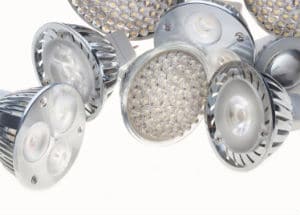

 April 2, 2015: For over decades, phosphors have been used for fluorescent lighting. With the growing usage of LEDs across the globe due to their energy-efficient operations, the demand for innovative phosphor solutions has also increased. As LEDs are increasingly being used for innumerable lighting applications, new methods of using phosphor are also being developed in order to convert blue light in a wide range of colours.
Growing preference for LED phosphor lights
As countries are shifting their focus towards LEDs due to their longer life, lesser power consumption, and increased efficiency, the global LED phosphor market is witnessing stupendous growth. However, the development of new phosphor solutions for LEDs lights does bring in a host of challenges for the global LED phosphor market. Unpleasant coolness or warmth, sub-standard colour rendering as compared to conventional bulbs, and changes in LED colour temperature with viewing angle are some of the challenges faced by the global LED phosphor market. The next big challenge faced by the global LED phosphor market is the influx of new patents in the market, which is leading to a war for intellectual property (IP) right for several players.
Impact of maturing LED phosphor market on IP
The history of bight LEDs can be traced back to the 1990s. Gallium nitride (GaN)-based blue LED was first manufactured in Japan when Nichia researchers and professors from Nagoya University collaborated their research and information. The combination for blue LED chip was first patented by Nichia in 1996. Over the years, research analysts have observed that the phosphor IP scene is a rich one, but definitely a lot more complicated than it was ever meant to be. Only thousands of patent families with just a handful of patents have given a good return on investment to owners in terms of market exploitation, share, and increased revenue options from royalties.
As the global LED phosphor industry is maturing with breakthrough innovations, it also redefining the fundamental patents so far. Though the challenge of capitalising on patents remains, manufacturers are looking at ways to make their offerings more efficient and cost-effective. The biggest opportunity for developers in the near future is the disruptive potential of any new composition.
Innovative colour schemes dominate global LED phosphor market
Besides addressing the need for improved quality, phosphor manufacturers such as Intematix are looking at developing a wide spectrum of colours compositions. For instance, Intematix presently holds patents that cover a huge range of green phosphors called LuAGs. Simultaneously, companies are looking at developing products that will outperform existing ones with better color stability and a longer life as well as wavelengths.
China emerges as the leader in the global LED phosphor market
The global LED phosphor market is geographically segmented into North America, Europe, Asia Pacific, and Rest of the World. However, China emerges as the dominant country with a huge market share in the global LED phosphor market. It was till 2008 that Chinese LED packaging firms procured phosphors from imports. It was only after domestic players entered the market that imports were reduced to 80% in 2010 and 60% in 2011, boosting local production and increasing the market potential. Furthermore, as regions in Europe are also implementing policies to save on energy consumption, it is likely to motivate end-user industries such as automotive, phones, LCD TV, lighting, and portable PCs such as notebooks.
Some of the key players in the global LED phosphor market are Everlight Electronics Co. Ltd., Avago Technologies, Cree Inc., Philips Lumileds Lighting Company, Osram Sylvania Inc., Citizen Electronics Co. Ltd., Epistar Corporation, General Electric Company, Nichia Corporation, Seoul Semiconductor Co. Ltd., Edison Opto Corporation, Stanley Electric Co. Ltd., and Universal Display Corporation. The investment plans and financial outlooks of these companies will decide the future of the global LED phosphor market in the coming few years, along with changing consumer preferences.