
 By Richa Chakravarty
Friday, January 17, 2014: Despite the huge domestic demand for electronic products and components, Indian manufacturers are still not the first choice of traders when it comes to procuring components. Today, electronic goods are the third most imported items, amounting to a value of US$ 32 billion in 2012-13. By 2020, India’s electronics import bill will be around US$ 400 billion, exceeding our oil imports.
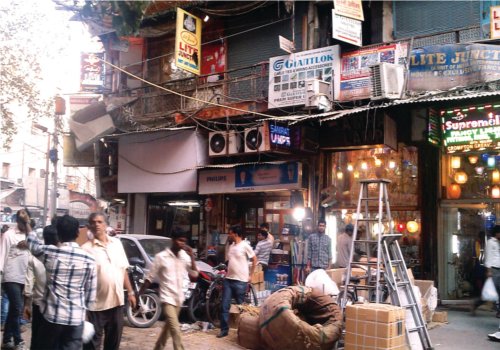
Traders from Lamington Road in Mumbai to Lala Lajpat Rai market or Bhagirath Palace in Delhi, from Ritchie Street in Chennai to Chandni market in Kolkata, are heavily dependent on imports from countries like China, Taiwan, Korea, Hong Kong, Singapore, etc, for all their electronics requirements. The main reason for this state of affairs is the non-availability of these products and components from Indian manufacturers. Traders are, therefore, left with no choice but to look to offshore markets. Imports may not be the smartest approach, but here are some of the advantages and disadvantages of importing electronics.
Advantages of buying from overseas market
Competitive prices: The prices that the overseas market offers are much lower than that quoted by Indian manufacturers. The cost of the product being manufactured in India is governed by several factors. Non-availability of components, unfavourable manufacturing policies, the local tax system and duty structure, etc, all tend to make Indian-made products costlier. “Overseas markets offer the same quality product (as domestic manufacturers) at much cheaper prices. A simple mobile charger that costs Rs 40 in India is available for Rs 28 in China. Manufacturing centres abroad have a huge export market to cater to, of which India forms only a small part, says Jayesh Mehta, proprietor, Sunrise Semiconductor.
Better lead times: Lead times offered by domestic manufacturers are longer than that of the international players due to the low volume of production in India. In the case of a ready and running product, the lead time offered by overseas manufacturers is less than that of new products. Domestic manufacturers on the other hand, take longer lead times for both cases. “A domestic manufacturer sometimes takes more than two months to just prepare a mould, whereas other international players supply the same product within 14 days. A longer lead time affects the business of traders, leading them to lose out on good bargains,” says Jayesh Mehta.
Quality and standard products: Imported products manufactured by international players are made keeping in mind international standards in quality. “The general perception of customers in India is that Chinese products are of low quality. China manufactures products of five different quality levels. There are German and Swiss companies that have their manufacturing bases in China.
All these companies follow stringent quality parameters. So to think that products out of China are not of high quality is wrong,” says Anand Bhansali, director, Anand Industrial Components.
Disadvantages of buying from overseas markets
Custom hassles: While importing electronic products from the overseas market, traders have to go through a lengthy custom clearance process—right from obtaining import/export licences (which is called the IEC code) to finding a suitable agency for appropriate clearance and freight forwarding. “The whole process is cumbersome as one has to furnish lots of details and innumerable documents,” says Jayesh Mehta.
Just in time delivery: The minimum delivery time required to send a consignment in India is at least 7-10 days. In case of an immediate requirement, a trader has to look for a local procurement partner (domestic manufacturer). This is the reason that the traders plan their purchases two to three months in advance.
Hassles in case of a product/component getting rejected: This is one of the biggest obstacles while trading in imported components. In case a product gets rejected or if it needs to be repaired, the trader has to procure a certificate of rejection from an authorised certifying agency that will then be assessed by the embassy of the seller country. This is a lengthy and cumbersome process. “Also, traders have to inform the clearance and custom department about the rejected goods since non-disclosure of this will attract further custom duty when the replacement or repaired product is re-imported. So, there are various levels of authorities involved when goods get rejected and need to be sent back to the seller,” says Jayesh Mehta.
Minimum order quantity (MOQ): Generally, firms overseas manufacture products in bulk and also sell them in bulk. The sellers have their own MOQ and refuse to sell volumes below a certain quantity or number. This is sometimes a problem for those trading with the selling company for the first time and hence are not sure about the quality and price. But some traders find this an advantage when they are sure that domestic demand will absorb the entire MOQ purchased. “Though the product or component may not be immediately absorbed and lie in our stocks or warehouse, we are sure it will rotate in the year of purchase,” says Anand Bhansali.