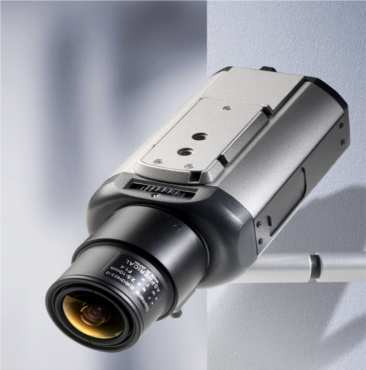

Surveillance is being used to gather information about criminal and terrorist activities, and to help deter untoward incidents. Interestingly, surveillance is slowly moving out of the realm of pure physical security. With network video and remote monitoring capabilities, and the advent of embedded applications in security products, surveillance is now emerging as a tool for gathering business intelligence and other applications.
 By Richa Chakravarty
Monday, February 21, 2011: According to an annual IMS Research report, the network video surveillance market in India is currently valued at $26.1 million and is poised to grow to $89.2 million by 2013. The projections clearly underline the huge growth being witnessed by this segment.
Currently the market is more project driven, making it difficult to quantify demand in terms of user requirements. There is more emphasis on matching up to certain product feature sets rather than meeting end user requirements. “There is no denying that the government sector is the biggest user of network video, inspite of these challenges and quality product manufacturers will have to look at new strategies to address this market. But manufacturing units, retail outlets and malls are a few other segments that are driving the increased demand for security equipment. Demand is being driven by the need to secure facilities, and the current crop of products are proactive rather than reactive,” says Prakash Prabhu, country manager, Axis Communications India, a Swedish company that manufactures network video products for commercial establishments.
Here’s a look at the sectors that have contributed to the massive growth of the surveillance vertical in India.
Government and public sector units
Owing to a number of terrorist activities, this sector has shown a very high demand for security cameras. Incidents like 26/11 have changed everyone’s view of security needs and threats. It has heightened awareness about the need for stronger security measures and proactive surveillance. All government and business establishments are taking stock of their current security infrastructure, identifying gaps and taking steps to improve security. The demand for video surveillance and other security products has increased significantly in the last couple of years.
Whether it is government organisations, transportation services or businesses, every segment is investing heavily in boosting the security infrastructure. “Many airports are being renovated and, hence, require state of the art security equipment. Cameras are being installed at all railway stations across the country. Previously, only major railway stations had video surveillance capability. Now, the government is investing in securing railway stations in tier II cities and upgrading infrastructure at metros,” says Sanjeev Sehgal, managing director, Samriddhi Automations Pvt Ltd, better known as Sparsh. The company designs and manufactures technologically advanced electronic security devices in India.
Considering the immense investments in infrastructure being made across India, the government and infrastructure related industries are generating a large demand for surveillance equipment. “Major metros are growing faster than estimated, and this is putting a lot of pressure on improving infrastructure like roads, metro stations, information facilities and disaster management systems. Apart from the traditional requirement of surveillance for security purposes, today, video data can be useful to manage traffic flow and understand patterns, to get real time visual information in case of any natural calamity, and integrate this information with the response systems under the ambit of the ‘safe city’ concept,” adds Prakash Prabhu.
Video surveillance equipment is being used for traffic management as well. City surveillance projects in major cities are in the process of starting to monitor all major crossings of the city. Recently, the Delhi traffic police has floated tenders for automated traffic control management systems using surveillance cameras. Once this project is proved to be successful, it will generate a similar demand in other cities.
Security cameras that best suit the purpose
Security camera applications for each segment vary. The key considerations in video surveillance are, first, the capability to see more details and second, have a wider coverage. The cameras selected should be able to monitor the inflow of people and vehicles in and out of entrances, exits, parking lots and restricted areas. HDTV/megapixel technology enables network cameras to provide a higher resolution of video images than analogue CCTV. These cameras at stations, terminals and airports, as well as on board buses and trains, provide valid evidence in the event of criminal incidents, vandalism and insurance claims.
“HDTV and megapixel network cameras are typically used in city surveillance situations to provide high resolution video streams from locations where there is a need to be able to clearly identify people and objects, or get a larger overview, either while viewing live or recorded video. Usually, Pan-Tilt-Zoom (PTZ) cameras will play a large part in such deployments for larger and more flexible coverage,” says Prakash Prabhu.
“Cameras with features like power over Ethernet (POE) and a high optical zoom (around 40X) are the perfect fit for these requirements. We have already given demonstrations to a couple of state departments for their city surveillance and we are in the process of designing total solutions for the same,” says Jaikumar Pillai, marketing manager, Canon India, a strong player in the surveillance business and a manufacturer of high end products.
Banking sector
Security requirements are growing in the banking sector as well. The Reserve Bank of India has made it mandatory to install surveillance cameras in all branches and ATMs. This has created a great demand for security devices in the banking sector. Apart from RBI, insurance companies and local police authorities insist on CCTV footage if any incident occurs in banks/ATMs. Therefore, it is essential for these facilities to have appropriate video surveillance equipment.
Banking establishments are upgrading their systems to incorporate cameras and their associated recording software. Surveillance with the right technology platform can help bankers in many ways. Not only can it help prevent potential fraudsters and robberies, but also provide a safe and secure environment for the staff and customers.
With an array of devices available and customisation taking place, companies offer a gamut of products for customer specific requirements. Monitoring multiple branches from a central location or through a mobile, and rapidly verifying and responding to the alarms; and capturing HDTV quality video of all incidents, are some of the latest features. “With better technologies and open integrated systems that can integrate thousands of remotely accessible locations, network video surveillance seems to be custom made for banking,” concludes Prakash Prabhu.
Security cameras that best suit the purpose
Traditionally, banks and similar high security premises are the largest users of surveillance cameras, considering the high risk that they operate under. The requirements from surveillance cameras often include high image quality and details, as well as a full frame rate, making HDTV network cameras the natural choice. For banking requirements, one can benefit from a wide range of network cameras, including deterring entrance cameras, discreet exit cameras, high resolution lobby cameras and ATM monitoring solutions for both indoor and outdoor use. Thermal imaging is also very useful for monitoring vaults, data centres and certain high risk areas.
Education sector
This sector is gradually increasing its demand and today, one can find surveillance cameras installed at corridors, classrooms and playgrounds in schools, colleges and other institutions, with the aim to keep a closer watch on the whereabouts of students within the premises. “Some universities not only use these cameras for security but for long distance communication as well. IP cameras and solutions are used to deliver lectures to remote campuses,” informs Jaikumar Pillai.
Security solutions enable educational institutes to stay focused on their core business, which is to teach. It is also a future proof and cost efficient tool to increase the security for students and staff, prevent violence and theft, minimise the cost of vandalism, and investigate accidents and identify suspects in case of trouble. The surveillance solutions provided by various companies today enable remote access to video from any number of branch offices from a single location. Besides, the complete system can easily be connected to the existing network infrastructure and computers, thus keeping installation and maintenance costs low.
Security cameras that best suit the purpose
Primarily, indoor dome shaped cameras are preferred in this sector. The main issue here is with connectivity, so users need cameras with better compression technology, vandal resistance and anti-tampering features. Cameras used here should be able to monitor entrances, exits, playgrounds, boundary walls, classrooms, and parking areas to check the inflow and outflow of vehicles. Along with IP cameras, PTZ cameras are also used in this sector.
Real estate
This sector is a new emerging market and it has witnessed a huge growth in just a few years. “Real estate sector is indeed on the upswing, with builders and promoters using surveillance products as part of a total package when customers are looking for an apartment or a house. Even NRIs who are getting their houses constructed in India, can now keep a watch over the on-site activities via IP cameras,” explains Jaikumar Pillai.
Similarly, the service industry has also benefited from the surveillance tools used in real estate. The main purpose of surveillance here is to provide a safe and secure environment for guests and visitors. Since infrastructure investment in hotels is very high and customer safety is of paramount importance, the ROI in surveillance cameras needs to be measured, factoring in the tremendous risk mitigation and management control these devices offer—in terms of the reduced incidence of theft, impersonation, fire hazards and other variables. Upcoming gated communities and township projects have further stimulated the demand for security equipment.
Security cameras that best suit the purpose
Cameras with features like low light recording and that can capture images using infrared light are suitable for this sector. Some key features like motion detection, auto tracking of weather conditions and vandal resistant domes are also being used. “IP based surveillance systems are perfect for township projects. While there will be cost savings from fewer security personnel, an IP based system can enable the monitoring on a 24/7 basis. This is virtually impossible for security personnel,” says Sanjeev Sehgal. In addition, using thermal cameras can help monitor even dark areas. These work by surveying an area in complete darkness. The images generated are based on the heat that always radiates from any object, vehicle or person.
Today, there are a wide range of network video solutions, including network video cameras, video encoders, video management software and accessories for entry level to??? professional installations. “For the hospitality industry, fixed dome network cameras are ideal for indoor discreet surveillance because of their unique form factor, which allows them to be installed in the same enclosure as a spot light, thus lowering the cost and effort of installation,” informs Prakash Prabhu.
Customisation—way to increase demand
Security and surveillance companies today offer the broadest portfolio of products for customer specific requirements, and customisation plays an important role. All sectors require some level of customisation to meet their unique needs. However, some applications are common across the sectors. “Specialised solutions, including video analytics, are being developed for specific applications. Specific cameras are available for specific requirements such as number plate reading cameras for reading number plates with headlights on, IR cameras to view in dark, IR speed domes for viewing long distances in the night with zoom facility, etc. Video analytics are available for various needs including motion detection, missing objects, counter flow, unattended objects, lane detection, virtual tripwire, etc,” informs Sanjeev Sehgal.
Thanks to technology and customisation, today surveillance does not imply merely getting information 24/7, but getting relevant information at the right time. These cameras have inbuilt intelligence, which enables them to alert security personnel or activate the recording if an event or an activity takes place in the surveillance area, unlike earlier days when these cameras merely recorded endless reels of useless information. This way, less storage space is used, and only relevant information is stored.
Electronics Bazaar, South Asia’s No.1 Electronics B2B magazine