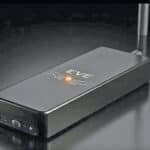
The use of Wi-Fi functionality in small-cell base stations will be a game changer for cellphone service providers, easing heavily congested data pipes while linking together billions of devices into a single network architecture, according to the IHS iSuppli Mobile & Wireless Communications Service at information and analytics provider IHS.
Small cells—also known as metro cells—are low-power base stations each supporting approximately 100 to 200 simultaneous users. Intended to augment wireless coverage and capacity in dense urban areas, the small cells will likely be installed in public facilities such as malls, railway and subway stations, the sides of public buildings, and on street or traffic lights.
IHS expects large-scale deployment of small cells to start in 2014.
Small cells will communicate with the core network through a radio network controller to ensure that available wireless spectrum resources are properly managed and distributed between the macro or micro network and the small cells, maximizing available capacity in the process.
In general, small cells will be outdoor solutions that address capacity issues, while residential and enterprise femto base stations will be indoor solutions. Both solutions will coexist alongside each other, as well as with macro and micro base stations and also with Wi-Fi access points—all in order to provide a heterogeneous networking architecture.
“By combining the different elements of just such an architecture, wireless carriers can use small cells to deploy optimized solutions tailored to the coverage and capacity requirements of networks and their different locations,” said Jagdish Rebello, Ph.D., director for consumer & communications at IHS. “For entrepreneurs, intellectual-property firms and wireless providers, the offloading approach also affords them an opportunity to develop a unique ‘network of networks,’ which can deliver seamless handoffs as users move from cellular to high-bandwidth personal networks like Wi-Fi.”
The rise of these new types of base stations is being propelled by the massive and growing installed base of Wi-Fi connected system worldwide.
“Wi-Fi is becoming ubiquitous and spurring new opportunities, including the capability for wireless service providers to offload chronically clogged 3G and 4G cellular networks into heterogeneous architectures,” said Steve Mather, senior principal analyst and subject matter expert for wireless at IHS. “Such architectures will involve a combination of macro and micro base stations, coupled with low-powered small cells and enterprise femto cells. This approach overall will reshape the connected world by linking billions of devices with free, high-speed links.”
Wi-Fi everywhere
Shipments this year of Wi-Fi chipsets will reach a projected 2.14 billion units, up a robust 20 percent from 1.78 billion in 2012. This year’s anticipated increase continues the impressive run of double-digit growth that started at least five years ago and will persist for three more years until 2016, after which expansion dips to a still-strong 9 percent. By 2017, Wi-Fi chipset shipments will amount to 3.71 billion units, as shown in the attached figure.
Overall, approximately 18.7 billion Wi-Fi chipset units will be shipped from 2011 to 2017—nearly all of which will belong to the high-performance 802.11n version. To put that number in context, the entire planet has 7 billion people—which means that Wi-Fi chipset shipments will outnumber the earth’s population by more than two-and-a-half times.
The devices containing embedded Wi-Fi chipsets are many, but mobile handsets stand out in particular.
By 2015, nearly 1.2 billion handsets out of a total of 1.9 billion cellphones produced that year will include Wi-Fi functionality. Approximately 70 percent of handsets sold worldwide by then—and well over that figure in North America and Western Europe—will be smartphones with embedded Wi-Fi.
Other prominent devices that will serve up Wi-Fi include headsets, computer peripherals, mobile PCs and tablets.
Also by 2015, some 725 million households worldwide will have a Wi-Fi access point thanks to increases in global broadband penetration. This factor, coupled with the billions of Wi-Fi chipsets that would have been bought by then, presents a remarkable wireless broadband platform primed to spawn new consumer behaviors and lasting services.