
Wednesday, December 11, 2013: Vishay Intertechnology crossed its 50th year in 2012, and today, it has become one of the world’s largest manufacturers of discrete semiconductors and passive electronic components, through a series of innovations and acquisitions. In 1985, having grown from a start-up into the world’s leading manufacturer of foil resistors and strain gauges, the company began an ongoing series of strategic acquisitions to become a broad-line manufacturer of electronic components.
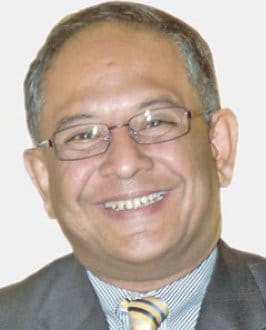
In a conversation with EB Bureau, Sougata Ganguli, director, sales, India, talks about the true picture of the manufacturing sector in India as well as about Vishay’s plans and strategies.

EB: Please tell us more about your organisation’s ventures and operations in India?
Vishay has two manufacturing unitss in India. Vishay Components India Pvt Ltd, located in Loni, Pune, is engaged in the manufacture of resistors and capacitors (including power capacitors under the brand name, ESTA). Vishay Semiconductor India Pvt Ltd, located in SEEPZ, Mumbai, is engaged in the manufacture of modules, bridges and rectifiers. Vishay has also established a global business application centre to support the IT systems of Vishay worldwide, and to offer other support services such as BoMCon, RoHS, and REACH for Vishay’s sales and marketing efforts worldwide.
EB: What are Vishay’s India sales figures and what is its percentage in your global sales, and where does India figure in your investment plans via-a-vis other countries?
Sales in India account for about 2-3 per cent of the sales revenue of Vishay worldwide. In the last three to four years, Vishay has invested close to $10 million to establish a production facility for power electronic capacitors in India.
EB: Do you see India as a sales destination or as a manufacturing destination, as well?
India is not only a sales destination for Vishay, but a manufacturing destination as well. We already have two manufacturing locations in India. In the last decade, Vishay has consolidated factory operations of leaded fixed film resistors and film capacitors by transferring the production capacities from other factory locations. In these product lines, Vishay India is the largest manufacturer within the Vishay world.
EB: What are the factors limiting manufacturing in India?
The slow growth of electronics manufacturing sector in the country has been a limiting factor for Vishay. Electronics manufacturing worldwide is highly competitive and sensitive to quality. Labour legislation in the country is archaic, which affects labour efficiency and productivity. Furthermore, obtaining an export licence for items that have a dual use is time-consuming and very tedious. This has an adverse impact on our manufacturing in India.
EB: Have you explored any of the policies or schemes offered by the Indian government? In your assessment, what have been the possible hurdles that prevent firms like yours from availing the benefits offered?
The initiatives of the Indian government to develop the electronics manufacturing industry in the last few years has been very encouraging. We are also beneficiaries of some of the incentive schemes such as the focus products scheme and status holders incentive scrip. The safe harbour rules introduced recently is a step in the right direction. However, the procedures involved in claiming these incentives are still lengthy and time consuming.
The multiple tax structure is still in operation. GST implementation remains a distant dream. From the income tax perspective, litigation associated with the transfer pricing is on the increase. Establishment of the dispute resolution panel has not yielded the results expected.
EB: Does Vishay’s manufacturing output in India meet the full local demand?
Vishay’s sales team in India supports the sales of Vishay products manufactured across the globe. Only about 20-25 per cent of the products sold in India are manufactured in India. Our strategy has been to meet all the electronic component needs of the customer. It is, however, not feasible to manufacture all products in the country as the volumes required are still low. As and when the volumes grow, Vishay will set up manufacturing facilities for such products to cater to the local market. Until then, Vishay will support the local requirements from the output of its factories across the globe.
EB: India’s potential in design has been largely untapped. Do you have any plans of tapping this?
Vishay has a design centre in India for high voltage MOSFETs. In addition, we also have about 10 R&D engineers who support the development activities of Vishay in India in the field of film capacitors and leaded fixed film resistors. Vishay recognises the potential of India in this area and is evaluating the possibility of expanding its design team to cater to other product lines.
EB: What are your growth plans in India?
Being manufacturers of electronic components, our growth in the country will depend on the growth of electronics manufacturing. With the growing emphasis on electronics manufacturing in the country, we expect significant opportunities for Vishay in the coming years.
EB: Please share some details about your products and their respective markets?
Vishay Intertechnology has a diverse portfolio of semiconductors and passive components, including diodes, MOSFETs, optoelectronic products, selected integrated circuits, resistors, inductors and capacitors. This enables it to provide a one-stop shop service and offer many different parts for each customer’s design. Its innovations in technology, successful acquisition strategy, superior product quality, and one-stop shop service to customers have made the company a global industry leader.
Vishay Intertechnology’s components are used in virtually all types of electronic devices and equipment, in the industrial, computing, automotive, consumer, telecommunications, military, aerospace, power supplies and medical markets.
Electronics Bazaar, South Asia’s No.1 Electronics B2B magazine