
 India’s LED industry has immense potential. This is evident from the fact that the market has displayed a CAGR of 56.1 per cent in the last five years
By Belal Khan
The LED market has emerged as one of the fastest growing industries in India. This industry has been primarily driven by factors such as falling prices of LED lights, increased initiatives taken up by the government and rising concerns with respect to energy conservation.
The LED market in India is hugely driven by a number of government initiatives. The revenue generated by this market has grown at a CAGR of 56.1 per cent over the past five years.
The market has evolved over the years, with south India and north India driving growth. However, low awareness with respect to LED lights continues to deter consumers from using them.
The major players in the LED industry are Philips, Osram, Bajaj, Havells and Syska LED Lights, among others. Philips held the largest share in terms of revenue generated in FY 2014, followed by Havells. Syska LED Lights was the third largest revenue earner.
“The LED market in India is expected to touch ₹ 216 billion by 2020 on the back of the government’s decision to switch to LEDs for all street lamps and public space lighting. The Indian lighting market is projected to grow by over 32 per cent during 2015-20, and the factors which would lead to this are increasing demand for electricity, government initiatives to replace traditional incandescent bulbs with LED bulbs, and increasing adoption of LED lighting across commercial and residential sectors,” says Sunil Sikka, president of Havells India Limited.
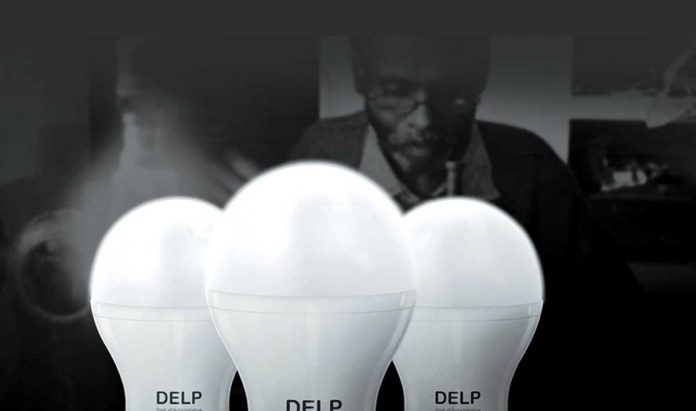
Domestic Efficient Lighting Programme (DELP)
A number of facilities for manufacturing and assembling LED lights have sprung up in India over the past few years. Many LED exhibitions have also been held in the country ever since the advent of LED lights. The government is also playing an important role in increasing LED penetration in the country with new schemes such as the Domestic Efficient Lighting Programme (DELP).
This ambitious LED lighting initiative run by Energy Efficiency Services Limited (EESL), a joint venture between PSUs under the Ministry of Power, has made the LED lamp industry scale heights in less than two years. However, awareness about the benefits of LED lights is still low in the rural areas of the country.
Under DELP, EESL has acquired LED lamps in bulk through competitive bidding, and distributed these to consumers through power distribution companies.
Recently, the government announced the decision to end the subsidy on CFL-based solar lighting systems in a bid to promote the use of LEDs.
 This scheme is presently running in six states – Rajasthan, Delhi, Maharashtra, Uttar Pradesh, Andhra Pradesh and Himachal Pradesh and is rapidly expanding to all other states.
The target of the project is to switch all the 770 million incandescent bulbs sold in India to LEDs, which will directly result in reducing electricity consumption by 20GW.
According to government data, the initiative will save around 100 billion kWh of energy and will slash green house gas (GHG) emissions by 80 million tonnes every year. The yearly saving in the power bills of consumers will be about ₹ 400 billion, assuming the average charge of ₹ 4 per kWh. India has taken an international pledge to reduce its carbon emissions by 30-35 per cent.
According to Arun Gupta, MD, NTL Group, “DELP is a very good initiative, which will propel the early adoption of LED bulbs by consumers. As on date, there is no proposal to make it mandatory. The government is taking all the possible steps to ensure that it gets adopted, including subsidising the costs to a great extent and offering low EMI schemes to balance costs.”
“A slew of innovative technologies such as inbuilt sensors have revolutionised the lighting industry, enabling it to make inroads into the residential, commercial and government space, in particular, in the Smart Cities project. Light Fidelity (LiFi), a brilliant technology that fulfils a user’s need for high-speed data transmission using nanosecond flickers of LED lights, is expected to be the next big revolution. The government needs to sustain this momentum and enhance awareness about LED lights and their energy conservation capabilities. It remains to be seen how the next five years would shape up for the sector, considering the government’s focus on replacing incandescent bulbs with LED lights,” says V.P. Mahendru, chairman, EON Electric.
The iLEDtheway campaign
In an attempt to create mass awareness regarding LED lighting, the Indian government has launched a campaign known as iLEDtheway. The Ministry of Power has tied up with several PSUs to promote the benefits of using LEDs all over India.
There are 47.5 million LEDs deployed all over India at present. A website has been created by the government that shows the number of LEDs installed via this initiative, coupled with the energy and cost savings.
LED usage is being promoted across different government departments too. For example, about 100,000 Western Railway employees have adopted 7 watt LEDs. The Delhi Cantonment Municipal area is going to replace 15,000 traditional bulbs with LEDs too. This campaign is surely going to have a far reaching impact.
 Market forecasts
India’s LED market is forecast to reach a turnover of around US$ 1.46 billion by 2019.
The China based company, Advanced Optronic Devices, and India’s Syska LED Lights are planning to jointly invest US$ 75.21 million in an LED manufacturing unit in Telangana.
“Given the current Indian market size and our national focus on LEDs, 2015 has been a growth year for the energy-efficient lighting segment. Although this industry has been growing at a robust pace over the last few years, government initiatives such as the Domestic Efficient Lighting Programme and consumer awareness about the economic benefits of energy-efficient lighting have given a good push to the industry, not only benefiting individual consumers, big and small, but also enabling the nation to save energy and cut carbon emissions,” says V.P. Mahendru of EON Electric.
The various segments of the Indian LED lighting market
The Indian LED market comprises various segments like street lighting, outdoor lighting, industrial lighting, railway lighting, automobile lighting, indoor lighting, etc.
As stated earlier, the growing demand-supply gap in the energy sector, government initiatives, increasing awareness and declining prices are the factors driving the growth of LED lighting in India. Lighting accounts for around 17 per cent of India’s power consumption, hence energy efficiency in this sector is crucial.
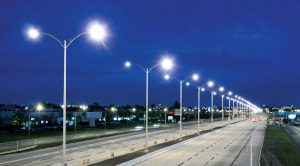
Street lighting applications make up the biggest chunk of India’s LED lighting market, due to various state governments’ initiatives to replace incandescent bulbs with LED bulbs. For instance, in Chandigarh, street incandescent bulbs will be replaced by LED bulbs in 18 major areas.
Kolkata and Mumbai are the key cities implementing LED lights in street lighting. Indoor, automobile and railway lighting are the other fastest growing applications in the Indian market.
Indian companies are also coming forward to start local manufacturing of LEDs. Domestic player, Sahasra Electronics is planning to invest US$ 1.79 million to start production of LED lighting products in India.
According to ‘India LED Lighting Market Outlook, 2021’, India’s LED lighting market is forecast to grow at a CAGR of 32.15 per cent over the next six years. LED lighting, which currently accounts for 19 per cent of the overall lighting market, is anticipated to reach 62 per cent by the year 2021.
The report reveals that Philips, Surya Roshni, Osram, Bajaj, Havells, etc, are the leading players in the Indian lighting market and are expected to dominate it throughout the forecast period also. The growing awareness about LED lighting in southern India has made it the most important market for LED lighting companies.
|