



C2i is building power systems that can help AI servers use electricity more efficiently and reliably.
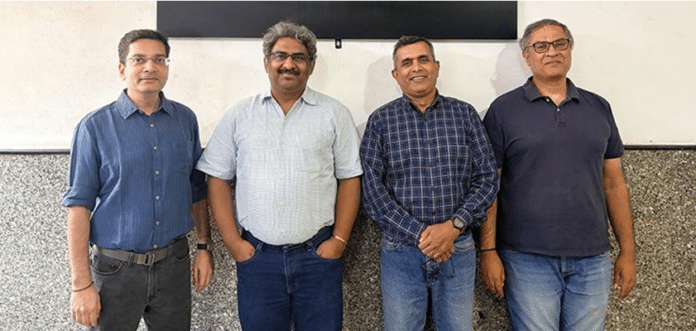
Two friends, Ram Anant and Preetam Tadeparthy, were working stable corporate jobs in Bengaluru when they spotted a new opportunity in powering AI systems for enterprises. While electric vehicles, industrial automation, and drones were advancing rapidly, enterprise AI power was still a tough, unsolved problem. Seeing a chance to innovate, they founded C2i in June 2024. The company develops advanced power delivery technologies for AI infrastructure, from hyperscale data centres to GPU computing clusters. Its focus is on improving how electricity is converted and delivered from the grid to high-performance processors.
C2i stands for ‘Conversion, Control, and Intelligence’, reflecting the company’s approach to converting grid electricity, controlling power delivery, and using algorithms to improve efficiency and reliability. Conversion changes the voltage, control manages how it happens, and intelligence uses smart algorithms to make it efficient and reliable.
The company claims to have around 10 filed patents and another 14 in progress. This IP forms the core of its technology, giving it a unique edge in both control and power conversion. The control IP allows extremely fast switching, while the power conversion IP improves efficiency in the voltage transformation stages. Together, these innovations contribute to roughly a 10% overall efficiency or performance gain. The gains come from reducing conversion losses, optimising power routing across motherboards, and enabling faster response during GPU power state transitions.
Electricity typically enters a server facility at hundreds of volts but must ultimately power GPUs operating at less than one volt while delivering extremely high current. Managing this conversion efficiently while supporting thousands of amps is one of the most complex design challenges in modern server infrastructure. To address this, C2i is developing semiconductor-based power management technologies that focus on the final stages of voltage regulation inside AI servers. Its first-generation products, taped out in May 2026, target voltage regulator modules and control architectures that directly power GPUs.
Alongside efficiency, the startup is also focusing on reliability and longevity. It is incorporating diagnostic and monitoring capabilities into its architecture to help monitor power delivery and improve system durability.
A key differentiator in the design is the startup’s software-defined voltage regulator architecture. Unlike conventional voltage regulation systems, the company’s integrates proprietary algorithms with power conversion hardware to dynamically manage switching behaviour, power density, and transient response as GPU workloads change.
Discussing the design challenges, Preetam reveals, “One of the biggest challenges we’re working on is the controller. We designed it to handle the full range from 800 volts down to 800 millivolts, forming the basis of what we call a software-defined voltage regulator. For low-voltage conversion, we can use silicon, but for higher voltages, we need to partner with organisations that provide GaN technology, since we don’t develop GaN solutions in-house. This requires collaborating either with a fab or with partners who can supply GaN components for our system.”
The startup currently follows a fabless semiconductor model. Its internal engineering team handles chip design and development using electronic design automation tools from Cadence, Synopsys, and Siemens, while external semiconductor foundries and ecosystem partners handle fabrication and packaging.
Discussing the company’s current growth challenges, Preetam adds, “One of the main challenges we are facing is building the backend flow after silicon tape-out, which includes bringing the product to market, testing, validating, qualifying, and running production at scale. At the same time, we are building systems and applications teams to work closely with customers, tuning our products to meet market and customer needs. This also helps us understand the problems customers are trying to solve, so we can incorporate them into the next generation of solutions. We are scaling these teams quickly, planning to hire many people over the next few quarters.”
The company expects to work with semiconductor ecosystem partners, including foundries, packaging providers, and system manufacturers, as it moves towards product commercialisation. As the technology matures, the startup aims to build collaborations across the semiconductor and data centre ecosystem while expanding its engineering capabilities and scaling product deployment in global AI infrastructure markets.
Looking ahead, the company plans to expand its architecture beyond voltage regulators to higher-voltage conversion stages and deeper system integration. Over the longer term, it plans to develop compact power delivery modules for AI computing platforms with higher power densities.

