


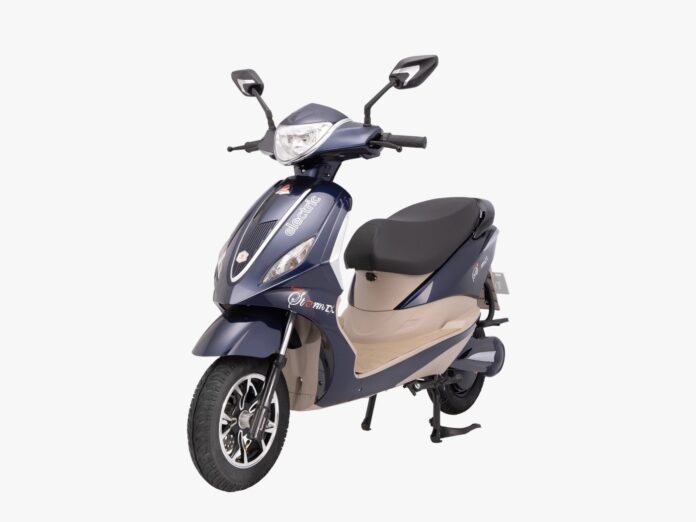

Wider EV adoption can help reduce crude-oil imports, lower pollution, improve energy security, and support the future use of solar power for transportation.
To prepare for the next phase of growth in India’s fast-evolving electric mobility market, Pune-based electric two-wheeler startup Tunwal E-Motors plans to increase its localisation and expand capacity.

“The company has already sold more than 550,000 electric vehicles (EVs) through a network of over 450 dealers across India and is now focusing on reducing import dependence while strengthening its supply chain,” shared Jhumarmal Pannaram Tunwal, Founder, Chairman, and Managing Director of Tunwal E-Motors during an interaction with Electronics For You.
Tunwal E-Motors has multiple manufacturing facilities in Sikar, Rajasthan, and Pune, Maharashtra, and has its corporate headquarters in Pune.
“Our main agenda is to manufacture everything in India. However, during the initial years we had to rely heavily on imported components because domestic suppliers were not yet ready to support the EV industry and production volumes were too low to make local manufacturing economically viable,” shared Jhumarmal.
According to him, current localisation is around 40 per cent, but the target is to gradually move toward a 60:40 structure in favour of domestic production. “Localisation becomes commercially viable only when production volumes rise, as low-volume manufacturing significantly increases component costs. As more EV manufacturers enter the market and demand grows, component suppliers are also beginning to manufacture locally, which is expected to reduce dependence on imports over time,” he added.
The startup has already initiated manufacturing several components in-house, including front wheels, seat-related parts, and certain brake cable components. It has also initiated its own battery assembly operations, which are expected to further improve localisation. Jhumarmal clarified that the company follows a vendor-driven model similar to that used by major automotive manufacturers, sourcing components from domestic vendors and overseas suppliers while carrying out assembly, quality control, and final dispatch in-house.
The company identified semiconductor-related components as the most difficult area for domestic sourcing. Controllers, displays, liquid crystal displays (LCDs), and other electronic components still depend heavily on imports. Jhumarmal said building a domestic ecosystem for such components requires large-scale investments and strong policy support. He also highlighted the challenge of battery cell manufacturing, noting that setting up a lithium cell plant requires investments of several billions of rupees, while many raw materials would still need to be imported.
Tunwal’s dealer network is spread across India, but the company has a stronger presence in Tier-2 towns and smaller markets. Management believes that customers in these regions prioritise reliability, affordability, and ease of maintenance over premium connected features. “Dealer selection is heavily influenced by service capability. We prefer dealers who can provide after-sales support, spare-parts availability, and proper customer service. Regular training is conducted on product knowledge, service procedures, and spare-parts management,” he said.
Jhumarmal also said many of its products are intentionally designed with moderate speed limits, particularly for students and first-time riders. The company believes that low-speed electric mobility can provide safer and more economical daily transportation while reducing accident risk.
To meet rising demand, Tunwal is expanding its manufacturing capacity in Pune. New facilities with a combined capacity of more than 1000 vehicles per day are nearing completion and are expected to become operational soon. The expansion is aimed at supporting growing dealer demand and improving supply capability.
The company has recorded significant revenue growth over the last three financial years. In the fiscal year 2024, it was around ₹1.04 billion, which increased to around ₹1.78 billion in FY2025 and in FY2026 it is approximately ₹2.78 billion.
The founder also mentioned that the company is unveiling upgrades to technology like faster-charging batteries, improved displays, mobile charging support, mapping features, additional sensors, and real-time range estimation. “These features will improve customer confidence and make electric vehicles easier to use in everyday conditions,” he added.
Jhumarmal said that wider EV adoption can help reduce crude-oil imports, lower pollution, improve energy security, and support the future use of solar power for transportation.
With localisation, supply-chain development, and capacity expansion becoming central priorities, Tunwal E-Motors is seeking to strengthen its position in India’s mass-market electric two-wheeler segment rather than compete primarily in the premium EV category.

