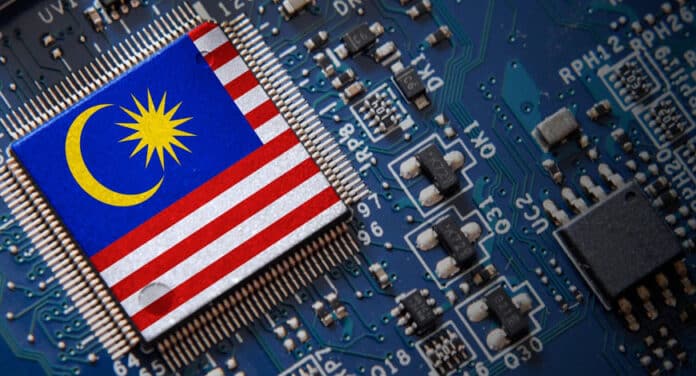

Malaysia is diversifying its E&E value chain to reduce semiconductor cycle risks, strengthen domestic supply chains and move local companies towards higher-value technologies such as IC design and advanced packaging.
Malaysia is seeking to reduce its exposure to global semiconductor industry fluctuations by diversifying export markets, strengthening domestic supply chains and expanding higher-value activities across its electrical and electronics (E&E) value chain.
The strategy falls under the country’s broader industrial development push, which aims to build a more resilient economy by diversifying growth beyond the E&E sector and increasing domestic technology ownership.
Malaysia’s New Industrial Master Plan 2030 (NIMP 2030) covers 21 sectors, including services, which contributed RM897 billion in 2025, according to the report. The plan aims to increase economic complexity, promote high-value-added activities and create more jobs.
The government has also held several rounds of engagement with local companies to encourage higher-value products and greater local technology ownership. These efforts are intended to strengthen economic resilience and reduce dependence on external factors that could affect domestic industries.
Supporting this direction, previously reported Budget 2027 measures include a planned RM1.2 billion injection by Khazanah Nasional Bhd and KWAP to help local companies move into higher-value technology segments. The GEAR-uP initiative and strategic funds in Selangor and Penang are also intended to strengthen the microelectronics ecosystem, particularly integrated circuit (IC) design and advanced packaging.
Together, these measures reflect Malaysia’s effort to develop more sophisticated electronics capabilities while reducing its vulnerability to downturns in the global semiconductor industry. The RM1.2 billion funding and related initiatives were cited from earlier coverage, rather than announced as new measures in this report.