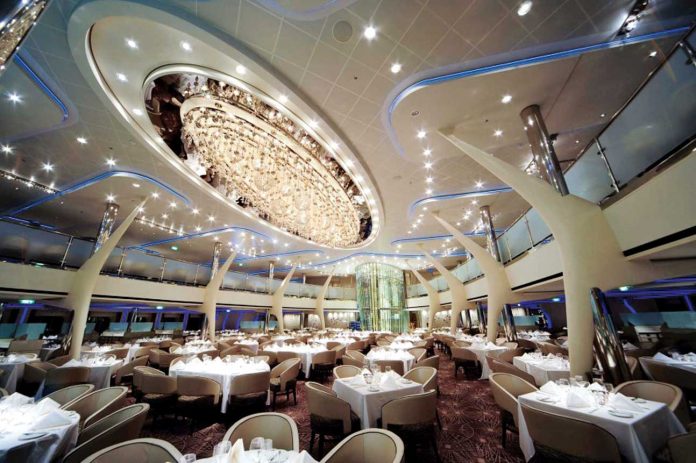

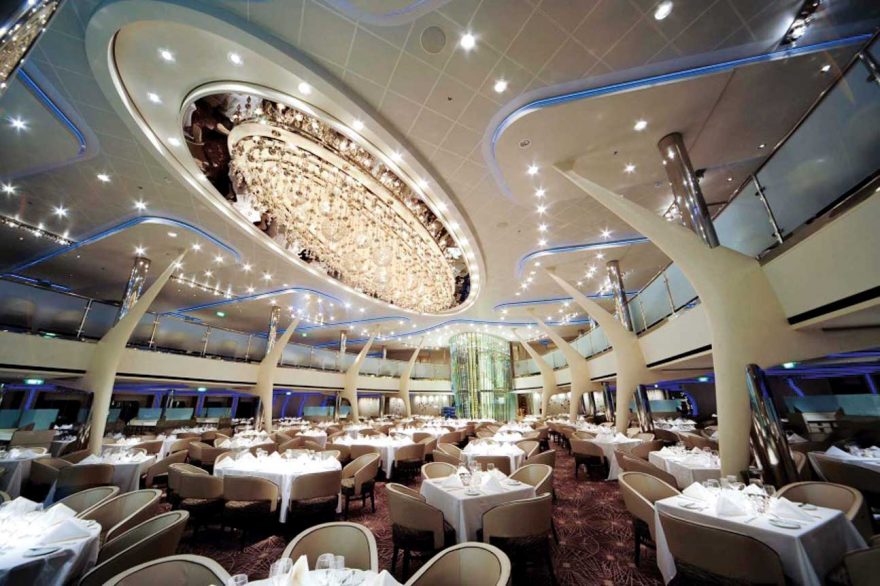
 The hospitality industry is adopting LED lights in a bid to reduce ever-rising energy consumption and costs, as well as to earn the environment-friendly tag
By Belal Khan
One of the highest costs incurred in the hospitality business is for electricity and, unfortunately, energy consumption in this sector is on the rise. In India, according to hospitality industry reports, energy costs account for almost 8 to 15 per cent of a hotel’s gross expenditure and, therefore, need to be controlled, as these impact profitability more than any other expense. Lighting is an important constituent of these costs.
The hospitality industry is an energy guzzler. Of late, energy conservation has taken on a new meaning for the hospitality industry, since hotels certified as ‘eco-friendly’ have the potential to draw more customers. This is why there is greater emphasis on reducing energy consumption through the use of energy-efficient LED lighting.

The industry’s take
According to Arun Gupta, MD, NTL Group, in this sector, warm lighting is generally preferred to create the desired ambience, for which, traditionally, a lot of energy guzzling incandescent lamps have been used. Currently, these effects can be replicated to a large extent by using LEDs, with an additional advantage of energy consumption being lowered by 30-40 per cent.
“The hospitality sector, with its specific requirements, is highly capital-intensive. The RoIs are a major issue in this sector. Lighting plays a very important role here, in common areas like lobbies, food courts, restaurants and other areas where creating the right mood is crucial. The major challenge for this industry is saving energy costs, and that’s why the sector is adopting LEDs,” says Gupta.
“Over the past few years, LED lighting has become extremely popular in the hospitality segment as it has acted like a game changer —highlighting the grandeur of the hotel’s architecture or the beauty of its landscape. Consequently, most of the hotels today are seen replacing the old halogen and CFL lights with LED lights,” says V.P. Mahendru, chairman, EON Electric.
LED lights come in a wide range of lumens and colours, serving different purposes – both indoor and outdoor. For instance, strip lights can be used to add warmth to the bar area as well as enhance safety along staircases. Other LED lights are now extensively used for highlighting the beauty of hotel lawns; while bug lights are used in outdoor areas as they produce a soft yellow glow, which repels insects that bother the hotel guests.

Challenges
In the hospitality segment, the focus is on being ‘different’. Architects and interior designers are the most important facilitators for an outreach programme in this segment. Novelty is of paramount importance here.
“The products and the theme have to be envisioned and implemented in such a way that the ambience is soothing and looks inviting to guests,” says Gupta.
According to Mahendru, installing LED lights at new or under-construction hotels is an easy task; however, making changes in an existing property is a bit tricky. One needs to take care of the original aesthetic designs created by the architect as well, while replacing the conventional lights with LED lights, he cautions.
Opportunities
Lighting impacts the guests’ experience of the spaces and, therefore, the hospitality industry has possibly the maximum applications for lighting. The trend globally is to move away from the energy guzzlers and look for energy-efficient alternatives without impacting the overall aesthetics of a space.
“Incandescents are completely out as they are the most energy inefficient lighting sources; and halogens and CFLs, which were widely used, are also being replaced. LEDs are the preferred choice when it comes to energy efficiency as well as aesthetics, both of which are big deciding factors,” says Gupta.
Over the past few years, the Indian hospitality industry has witnessed enormous growth, having recorded a healthy inflow of foreign tourists as well as an increase in domestic travellers.
V.P Mahendru says that the industry is poised for further expansion. According to the World Tourism Organisation, by 2025, annual tourist traffic into India will reach 15.3 million foreign visitors. There are areas in hotels like lobbies and food and beverage sections, which use electricity 16 hours to 24 hours a day. Transitioning to LED lights will enhance energy efficiency, save on electricity bills and also enhance the user experience.
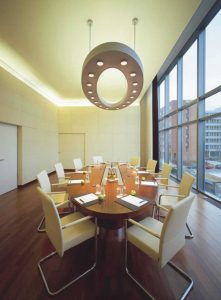 Products for the segment
NTL Group is working with several hospitality chains, restaurants, cafes and real estate developers. In addition, it is also working with a large number of architects and interior designers.
Based on its understanding of this market, NTL has created four special categories of products – Pharox retrofit LED lamps, downlights, LED strip lights and spotlights. These products come with specific features that cater to the needs of the hospitality sector.
Pharox retrofit LED lamps address the various requirements of workspaces and recreational areas in hotels and restaurants. These aesthetically designed lamps offer quality lighting for multiple applications, thereby adding style and grace to the surroundings.
Pharox LED downlights that come in recessed and surface mounted designs, emit warm and pleasant white light. These lights are absolutely safe and contain no mercury or lead. They have a special feature of lighting up without flickering.
Pharox LED strips are flexible during installation and deliver high performance, seamless lighting. Strip lighting technology offers a perfectly controlled, concealed source of lighting. It is the perfect product for creating a soothing lighting effect. Strip lights are available in multiple colours and adapt to rooms of all shapes and sizes.
Pharox spotlights provide quality lighting and focused illumination. These are ideal for accent lighting, are glare-free and ensure uniform distribution of light.
EON LED lights are attractive to look at, highly power efficient and have a long life. Apart from test certificates issued by BIS (Bureau of Indian Standards) that testify to the products’ compliance with Indian Standard Regulations, these lights also come with a five-year warranty.
These LED lights are designed with sensors that turn the lights on or off, based on ambient light conditions at dawn or dusk, on human presence in a room, etc.
Types of hotel lighting
In all, there are three basic types of hotel lighting.
Ambient or general lighting: Ambient lighting is a general illumination that comes from all directions in a room. It seems to have no visible source. It provides a soft, comfortable level of light for watching television or having a conversation.
Task lighting: This involves lighting up a small area where a particular task is being performed. It is used in dining rooms where food is served. The most important characteristic of task lighting is that the light source should not produce multiple shadows at the point of application, as it can strain the eyes of those involved in the particular task.
Accent lighting: Accent lighting highlights an area or an object in a room. This adds to the drama or style of a room by highlighting certain aspects of the decor. It is used to light up a picture or painting, and hence is very important to avoid glare and give an even distribution of light.
Trends
The key trends for lighting across the hospitality industry are as follows:
- Incandescent and CFLs as well as halogens are being phased out.
- Smart lighting technology in common areas that have inbuilt motion sensors is in. This leads to massive energy savings for corridors, banqueting areas, common washrooms and attached baths, lawns, pool areas, spas, wellness areas, housekeeping areas, staircases, etc. Any area that is not being used automatically switches off extra lighting, and only uses illumination sufficient for basic visibility and to keep the area ‘safe’. This also leads to energy savings.
- Smart lighting technology, which uses sensors to check/recalibrate the needs based on the available light/sunlight, is being used for lobbies, conference halls and banqueting facilities. As soon as the exterior/normal sunlight levels dip, the automatic dimmers come into play and brighten the areas, and vice versa.
- Dynamic coloured LEDs for different areas like exteriors and façade lighting, wellness areas and pools are being used. The red spectrum has proven health benefits that make you feel energised; the blue light spectrum makes those present feel awake and alert and is
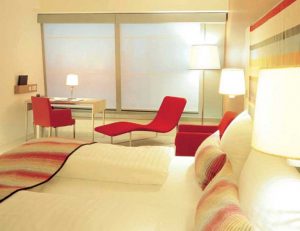 excellent for conference halls, restaurants and bars.
 - Leadership in Energy and Environmental Design (LEED) is one of the most popular green building certification programmes used worldwide, and is the next big thing for the hospitality industry. Since 2014, the credits earned for conserving energy and creating healthier guest environments are also available to LEED members. Lighting can therefore be a key component of LEED projects, particularly in hotels, because of the sheer number of indoor and outdoor fixtures. Compared to other improvements in the energy segment, such as high-efficiency heating, cooling or AC systems, lighting tends to offer a faster payback at a lower cost — and with minimal disruption to hotel guests. LEED also allows hoteliers to earn credits for using lighting controls to optimise energy use throughout the day.
- Key card access to rooms is an effective and low cost tool for energy savings, as it ensures that any lights and other electrical equipment are used only when the room is occupied. The focus is on optimal energy utilisation, reducing wastage or spillage and can add to regular energy savings. This is the next big trend when it comes to economy hotels, and is already the norm in the luxury segment.