


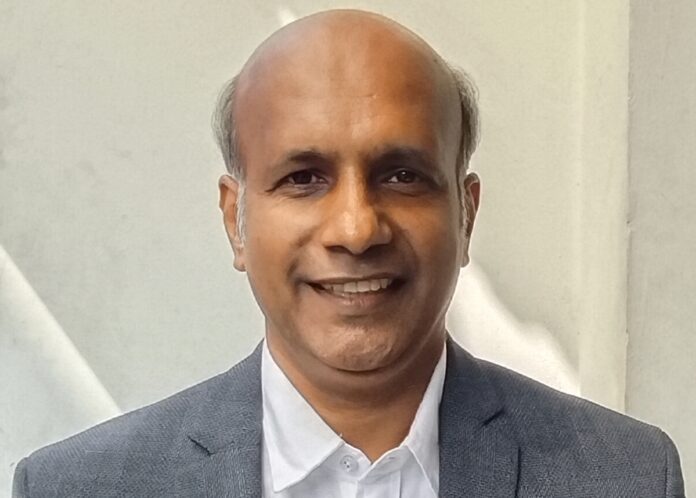

While AI and software startups attract attention and capital, electronics ventures often struggle for both. Raja Rajeev Kumar from IIT Startups, LaxmiRamaVarma Holdings International and ChromoSoul Ventures shares why building successful deep-tech companies demands more than innovation with EFY’s Akanksha Sondhi Gaur.
Q. What inspired the question: ‘Do electronic startups in India really get the attention they deserve?’
A. The question emerged from repeated industry discussions highlighting a clear mismatch between investor expectations and the realities of the electronics sector. Unlike IT, where rapid innovation cycles from Web2 to AI create continuous hype and quick returns, electronics is inherently a long-gestation domain. It demands patience, deep technical expertise, and strong ecosystem support. While interest in electronics is gradually increasing, the sector still attracts fewer founders because it requires long-term commitment and the ability to anticipate technological evolution over five to ten years. Additionally, many technically strong founders lack market understanding, making it harder to align innovation with real-world demand.
Q. How would you assess India’s current innovation ecosystem, particularly in electronics and semiconductors?
A. India has traditionally been strong in institutional research and development (R&D), with premier institutions such as the Indian Institutes of Technology (IITs), Indian Institute of Science (IISc), BITS Pilani, and others contributing significantly for decades. However, there has historically been a disconnect between institutional research and industry needs, especially in product-based innovation. Earlier, India lacked a strong consumer market and product ecosystem, allowing foreign companies to dominate.
Over the last 25 years, the ecosystem has evolved significantly. R&D capabilities have strengthened, global companies have established design and innovation centres in India, and institutional maturity has improved. Today, geopolitical shifts and global supply chain realignments are further accelerating interest in India’s electronics and semiconductor sectors.
Q. What are the key structural gaps preventing India from becoming a deep tech and intellectual property (IP)-driven leader?
A. Despite progress, several gaps remain. Infrastructure remains insufficient, particularly in specialised incubators and maker labs tailored to electronics sub-sectors. Electronics itself is not a single domain but a cluster of 10-12 sub-industries, each requiring dedicated support systems.
Another major gap is entrepreneurial capability. Founders often excel in technology but lack skills in market understanding, execution strategy, and collaboration. Unlike mature ecosystems such as the US, Indian startups rarely work in complementary partnerships. Additionally, access to experienced mentors and domain experts is limited, which slows down the growth of high-quality ventures.
Q. What are the most common gaps you see in startups today?
A. The biggest gap is not technology – it is fundamentals. Many founders are strong in IP and engineering but weak in business strategy, execution planning, and go-to-market understanding. Another major gap is the lack of customer insight. Founders often build solutions without a deep understanding of the customer’s real problem. Finally, collaboration is missing. Startups tend to operate in isolation rather than partnering with complementary players, limiting their growth potential.
Q. Why do hardware and electronics startups struggle more with funding?
A. Electronics startups face greater scrutiny due to the complexity of their business models and longer development cycles. Investors often struggle to evaluate such ventures, leading to cautious funding behaviour. Moreover, many founders focus heavily on IP development but neglect business fundamentals such as execution planning, go-to-market (GTM) strategies, and operational frameworks. Without strong fundamentals, even promising technologies fail to attract funding. The key issue is not just funding availability, but viability; startups must demonstrate a viable path to market and scalability.
Q. How do investor expectations differ between electronics and IT startups?
A. The core difference lies in time horizons and return expectations. Investors in IT are accustomed to faster returns, often within three to five years, even if the failure rate is high. Electronics startups, on the other hand, require longer incubation periods, require more capital, and entail greater execution risk, resulting in lower immediate success rates. Consequently, venture capital (VC) tends to favour IT sectors where scalability and exits are quicker. This creates a structural mismatch: electronics needs patient capital, but most investors seek rapid growth and valuation spikes.
In essence, India’s electronics startup ecosystem is not capital constrained – it is capital mismatched. Traditional VC built for software cannot fund hardware timelines. But with the rise of deep-tech funds, corporate investors, and government incentives, a new financing architecture is emerging.
Q. What are the biggest challenges in commercialising deep-tech innovations?
A. Deep tech startups face intense competition and long sales cycles, especially when dealing with large enterprise customers. Aligning products with customer needs is another critical challenge. Unlike software, hardware solutions often require integration into existing systems, making adoption slower and more complex. This increases both time-to-market and operational costs.
Q. What infrastructure is critical for hardware and semiconductor startups?
A. Three elements are essential: maker labs, skilled mentors, and access to customers. Unlike software development, hardware development requires physical infrastructure and frequent customer interaction for testing and iteration. Proximity to customers is particularly important, as it reduces costs and accelerates product development cycles.
Q. What does ‘innovation development’ mean to you beyond funding?
A. Innovation is about building sustainable startups, not just securing funding. It requires understanding how a product or IP fits future market trends, customer needs, and the broader ecosystem. The focus should be on enabling founders with clarity and execution capability, while providing access to expertise and support networks. Funding then becomes a natural outcome of a well-built venture.
Q. You work across multiple platforms and agencies. What exactly is your role in this ecosystem?
A. My role is essentially that of an ecosystem enabler, mentor, and strategist. I work closely with startups to identify gaps in their business fundamentals, help refine their strategies, and connect them with the right partners – be it investors, institutions, or industry players. At the same time, I collaborate with incubators, accelerators, and angel networks to design structured programmes that improve startup success rates. A large part of my work involves building bridges – between founders and investors, institutions and industry, and India and global ecosystems.
Q. Can you explain your role across IIT Startups, Chromosome Ventures, and LaxmiRamaVarma Holdings?
A. At IIT Startups, the role is that of a mentor and catalyst supporting founders by identifying gaps, building partnerships, and improving business fundamentals. The platform connects startups with strategic partners and institutional support within the IIT ecosystem. At Chromosome Ventures, the focus is on ecosystem building and designing frameworks for incubators, accelerators, and angel networks, while enabling structured venture building rather than short-term acceleration. At LaxmiRamaVarma Holdings, the approach combines investment with active support. The emphasis is on backing startups where strategic involvement can add value, particularly those aligned with India-focused innovation opportunities.
Q. What is your core objective while working across these multiple agencies?
A. The core objective is simple: to build better startups. That means helping founders become stronger business leaders, ensuring ventures are market-ready, and creating an ecosystem where collaboration is seamless. The focus is on building companies that can scale sustainably. When that happens, funding, partnerships, and growth follow naturally.
Q. What does your day-to-day work involve?
A. Most of my time is spent working closely with startups – understanding their challenges, refining strategies, and connecting them with the right partners. I also collaborate with institutions to strengthen incubation and accelerator programmes, while supporting consulting, investment-related activities, and strategic partnerships. Overall, the work revolves around mentorship and ecosystem development.
Q. What kind of work do you do with different agencies such as incubators, investors, and institutions?
A. With incubators and institutions, I help design and implement structured programmes – ranging from idea validation to venture building and fundability. These are plug-and-play frameworks that can be customised to suit each institution’s strengths and regional opportunities. With investors and angel networks, I work to improve investment frameworks, portfolio strategies, and deal-flow quality. This includes upskilling investors to better understand startups, especially in complex sectors such as electronics. With startups, the work is more hands-on: mentoring founders, refining business plans, building GTM strategies, enabling partnerships, and helping them move from concept to market readiness. build strong startups, and funding will follow.
Q. What makes your approach different from traditional accelerators or VC firms?
A. Traditional accelerators often focus on short-term programmes, and VCs primarily focus on funding. Our approach is different – we focus on venture building. We work on strengthening the idea, business model, strategy, and execution readiness before scaling. The goal is to build ventures that can sustain and grow over the long term.
Q. Why do you insist on a business plan instead of a pitch deck?
A. A pitch deck is merely a presentation tool, while a business plan reflects deep research, strategic thinking, and operational clarity. It reveals how well founders understand their market, product, and execution roadmap.
Building a business plan requires time and effort, forcing founders to validate assumptions and think through every aspect of the venture. This depth is essential for long-term success and cannot be replaced by a short presentation.
Q. What are your key evaluation criteria for startups?
A. I primarily focus on the founders; their mindset, coachability, and ability to learn. Next, I evaluate how well the product fits into future market trends and its competitive positioning. I also look at the strength of the business fundamentals, including clarity of strategy, execution readiness, and customer understanding. Overall, the emphasis is on whether the startup has a solid foundation and the potential to scale sustainably, not just a strong idea.
Q. How do you ensure startups become ‘fundable’ rather than just innovative?
A. Fundability comes from clarity and execution, not just innovation. We focus on helping founders build a strong business plan, validate their market, and define a clear GTM strategy. We also ensure they understand their competitive positioning and have a realistic execution roadmap. Once these fundamentals are in place, investors find it easier to evaluate and back the startup.
Q. How do you support startups beyond funding?
A. Support spans product validation, GTM strategy, business structuring, and global expansion. However, the core focus is on founder development, helping entrepreneurs become capable leaders and decision-makers. Startups are guided through structured frameworks that simplify complex processes and improve execution.
Q. How important is collaboration in building a strong innovation ecosystem?
A. Collaboration is critical. No single entity – startup, investor, or institution – can build the ecosystem alone. Institutions must align more closely with industry needs, investors need a deeper understanding of emerging sectors, and startups should actively seek complementary partnerships. India is moving in that direction, but there is still a long way to go.
Q. What role do institutions play in strengthening innovation in India?
A. Institutions are the backbone of innovation. They provide research capabilities, infrastructure, and access to talent. However, they must evolve beyond R&D and become more aligned with market needs through stronger incubation programmes, industry partnerships, and support for startups from idea to commercialisation.
Q. How do you collaborate with government bodies and international agencies?
A. Collaboration is largely about filling gaps rather than duplicating efforts. Government support typically flows through institutions such as the IITs, Indian Institutes of Management (IIMs), or registered incubators, so my role is to align startups with these frameworks and help them leverage available schemes effectively. With international agencies, the focus is on creating cross-border opportunities – connecting Indian startups with global ecosystems and vice versa. This includes facilitating partnerships, exchange programmes, and even helping startups set up design or development bases in different countries.
Q. Why is regional ecosystem development, especially in South India, important?
A. Startup activity is heavily concentrated in cities such as Bangalore, Hyderabad, and Chennai, leaving significant untapped potential in other regions. States such as Karnataka, Tamil Nadu, Andhra Pradesh, and Kerala offer strong industrial clusters, policy support, and emerging infrastructure. Developing regional ecosystems can unlock new opportunities, reduce concentration risks, and create more balanced innovation growth across the country.
Q. What initiatives are you currently leading to strengthen the ecosystem?
A. Four major programmes are being launched:
· Idea Sandbox – for early-stage idea validation
· Foundation First – to strengthen startup fundamentals
· Accelerator Plus – bridging pre-minimum viable product (MVP) gaps
· Fundability Program – preparing startups for investment
The goal is to build 100 strong startups across 10 institutions over the next 18 months, focusing on long-term sustainability rather than short-term success.
Q. How do you measure success across your initiatives?
A. Success is measured by how founders evolve as business leaders, how many startups reach the market with viable products, and the traction they achieve. Funding is a validation of progress, but not the primary metric.
Q. What metrics do you use to measure impact?
A. Impact is assessed through the quality of startup outcomes – market-ready products, customer adoption, and commercial traction. We also look at how effectively founders develop the skills needed to build sustainable businesses. Funding remains a secondary indicator rather than the primary goal.
Q. What is your long-term vision for India’s innovation and electronics ecosystem?
A. The vision is to build a self-sustaining, globally competitive ecosystem where startups are strong in execution, institutions are closely aligned with industry, and investors support long-term growth. In electronics and deep-tech, the goal is to enable Indian startups to scale globally while attracting international ventures to build and innovate in India.
Q. What role do you see yourself playing in this journey?
A. The role is that of an ecosystem enabler – building partnerships, identifying gaps, and creating frameworks that empower institutions and startups. The focus over the next few years is on launching scalable programmes and strengthening collaborations that support long-term innovation growth.
Q. What advice would you give to founders entering the electronics or deep-tech space?
A. Focus on fundamentals first. Understand your customer deeply, build a strong business plan, and be prepared for a long journey. Do not chase funding – build something valuable and relevant. Also, seek partnerships wherever possible. In deep-tech, success is rarely achieved in isolation.

