


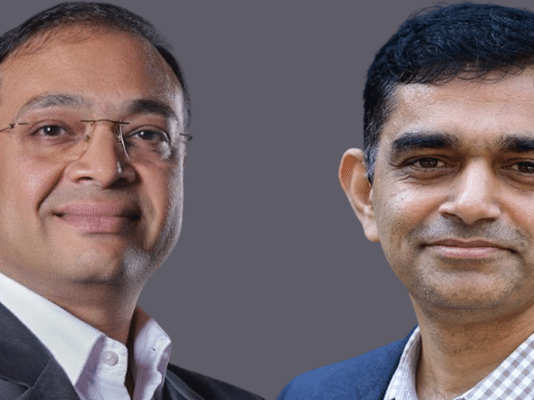

Can strategic partnerships accelerate India’s electric mobility ambitions? As L&T collaborates with EVR Motors to develop advanced electric drivetrain solutions, Prashant Chiranjive Jain and Sudeepth Puthumana share insights with EFY’s Nitisha Dubey on the partnership’s uniqueness, technological advantages, and future roadmap.
Q. What strategic factors led L&T Electronic Products & Systems to partner with EVR Motors?
A. Larsen & Toubro (L&T) Electronic Products & Systems identified electric mobility as a key growth area within its mobility electronics portfolio. While we already possess expertise in motor control units (MCUs) and other power electronics, we sought a partner with a differentiated motor technology. EVR Motors’ patented trapezoidal rotor technology offers superior power density, compactness, reduced material use, and strong intellectual property protection, making it an ideal fit for L&T’s electric drivetrain ambitions.
Q. What strengths do L&T and EVR Motors bring to this collaboration?
A. L&T contributes advanced manufacturing capabilities, market access, drivetrain electronics expertise, and large-scale production infrastructure. EVR Motors brings its patented electric motor technology, which offers improved efficiency, compact design, and lower utilisation of rare earth materials. Together, we are aiming to deliver fully integrated drivetrain solutions for electric vehicles.
Q. How does EVR’s motor technology differ from conventional electric vehicle (EV) motors?
A. The motor utilises a patented trapezoidal rotor design and soft magnetic composite (SMC) core technology, resulting in improved magnetic flux distribution, reduced copper consumption, higher torque density, lower weight, and a more compact form factor. These features improve efficiency while lowering overall material costs.
Q. What vehicle segments are being targeted?
A. The partnership targets the full EV spectrum, including two-wheelers, three-wheelers, passenger cars, and commercial vehicles. The drivetrain solutions will support power ranges of approximately 10-200kW.
Q. What will be the role of L&T in this partnership?
A. At L&T, we will handle design for manufacturing, supply chain management, testing and validation, customer engagement, and large-scale production. We also hold exclusive rights to manufacture and market EVR Motors’ technology in India across multiple vehicle categories.
Q. What testing and validation capabilities are being established?
A. We have developed a state-of-the-art EV testing facility in Bengaluru that can validate complete drivetrain systems. Additionally, a dedicated vehicle integration and validation centre is being established in Coimbatore, while homologation support is being conducted in collaboration with the Automotive Research Association of India (ARAI).
Q. How does the motor perform under India’s demanding operating conditions?
A. The motor has been designed with strong thermal management characteristics and optimised efficiency. The technology is well-suited for high-temperature and high-load operating environments commonly encountered across India.
Q. What benefits will EV manufacturers gain from adopting this drivetrain solution?
A. EV manufacturers will gain access to a locally designed drivetrain featuring higher efficiency, lower weight, reduced packaging requirements, improved vehicle performance, and greater flexibility for customisation. The solution is designed specifically for Indian operating conditions.
Q. What performance gains can be expected in terms of size and weight reduction?
A. The motor design can reduce form factor and weight by approximately 10 to 20 per cent in certain applications. This allows original equipment manufacturers (OEMs) to build more compact and efficient vehicles without sacrificing performance.
Q. What efficiency and performance improvements can EV manufacturers expect?
A. The technology can improve motor efficiency by two to four per cent, translating into approximately five to ten per cent additional vehicle range from the same battery pack. The design also delivers higher torque density, improved acceleration, better drivability, and enhanced energy utilisation.
Q. Can the motor be integrated into existing EV platforms?
A. Yes. The compact design allows relatively straightforward integration into existing vehicle architectures. OEMs can either adopt the technology in new vehicle platforms or incorporate it into upgraded versions of existing models with minimal redesign requirements.
Q. Does this technology reduce dependence on rare-earth materials?
A. Compared with conventional permanent magnet motors, EVR’s design significantly reduces the requirements for rare-earth materials. Depending on the motor variant, rare-earth usage can be reduced by 50 to 100 per cent, with some configurations eliminating heavy rare-earth magnets.
Q. What level of localisation is planned for manufacturing?
A. We are expecting more than 70 per cent localisation initially, with plans to increase localisation levels to nearly 90 per cent. Most components will be sourced domestically, while efforts are underway to further reduce dependence on imported magnet materials.
Q. What manufacturing infrastructure is being developed for production?
A. L&T is establishing dedicated motor production lines at its Coimbatore facility. Initial production will begin immediately with a semi-automated line before transitioning to fully automated lines. Larger manufacturing infrastructure is expected to be operational by the end of the financial year.
Q. Are there any discussions underway with EV manufacturers?
A. Yes. We are actively discussing with multiple OEMs interested in motors, motor control units, and complete drivetrain solutions. Customer interest spans both startup EV manufacturers and established automotive companies.
Q. Does L&T plan to export these motors globally?
A. Yes. While the initial focus is on serving the Indian market, L&T plans to expand into international markets once production scales up and customer deployments are established.
Q. Beyond traction motors, what other EV technologies is L&T developing?
A. We are developing a broader mobility electronics portfolio that includes integrated drivetrain systems (X-in-1 solutions), advanced driver assistance systems (ADAS) solutions, vehicle connectivity technologies, and software-defined vehicle platforms tailored to Indian conditions.
Q. What are the biggest challenges in commercialising this technology?
A. The primary challenge is scaling production quickly enough to meet growing customer demand. We are focusing on accelerating manufacturing readiness, workforce training, and supply chain development to support commercialisation timelines.
Q. How does L&T view the future of EV adoption in India?
A. L&T sees electrification as critical for India’s energy security and sustainability goals. We expect EV penetration to reach around 30 per cent over the next five years, driven by government initiatives, renewable energy growth, and increasing consumer adoption across vehicle segments.
Q. What market opportunity does L&T see over the next five years?
A. L&T believes the partnership can capture between 10 and 20 per cent market share within five years. The company sees significant growth potential across passenger and commercial EV segments as electrification accelerates in India.
Q. How does this partnership align with India’s vision of building a self-reliant EV ecosystem?
A. The collaboration supports India’s ‘Make in India’ ambitions by combining indigenous drivetrain electronics with locally manufactured advanced motor technology. The partnership aims to reduce import dependency, strengthen domestic supply chains, and create globally competitive EV solutions developed and produced within India.

