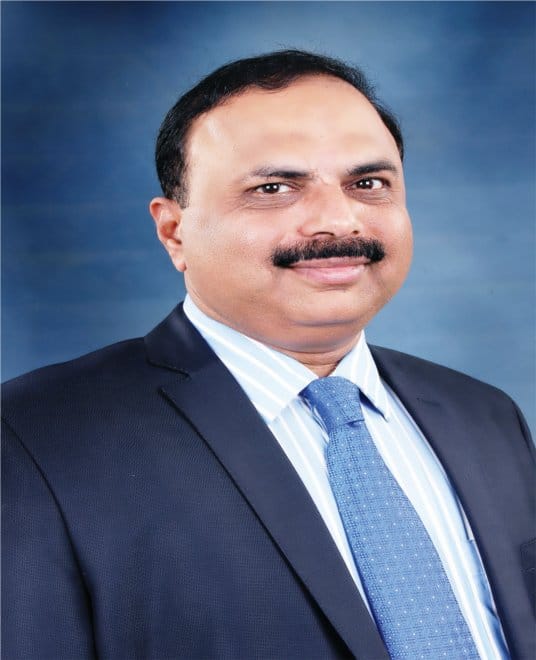

Wednesday, August 14, 2013: The India Electronics and Semiconductor Association (IESA), a premier trade body representing the Indian electronic systems design and manufacturing (ESDM) sector and the semiconductor industry, has recently announced its executive council for 2013-14. The new chairman, Sanjeev Keskar, who is also the managing director, sales, India & SEA, PMC-Sierra, spoke to Srabani Sen of Electronics Bazaar about the renaming of the association, its activities to create awareness about government policies, and its current focus.
“The Indian electronics ecosystem is at a point of inflection. The government has covered much ground in bringing about changes in policy and has set the stage for the industry to move to the next level. Now it is the industry’s chance to reap the benefits. We hope to see India very soon take her position in the world economy as a true leader in electronics,” he said. IESA currently has 180 members, but one of the goals of the executive council is to take this membership up to 250 in the next 12 months.

EB: Why was ISA changed to IESA?
When the Department of Electronics and IT (DeitY) had asked ISA to prepare a report on the ESDM sector, we found that India was going to be a big market for electronics in the years to come. India is supposed to touch US$ 400 billion by 2020 and we realised that this is one of the high growth sectors. India’s electronics import dependence is too high and as per an ISA-Frost and Sullivan report, almost 65 per cent of electronics are being imported. Of the 35 per cent of domestic manufacturing, only 10 per cent high value-added manufacturing is being done currently. Keeping these issues in mind, we thought of taking up bigger causes. We also have the right infrastructure and people to take up these issues. For the last three years, we have been working very closely with the government as knowledge partners to define the right policy measures.
EB: ISA was the only semiconductor association in the country. Now will your focus on semiconductors reduce?
Our focus on semiconductors will never reduce but, along with that, we will work for the electronics industry as well. There are other associations that are dedicatedly looking at this industry but there are many areas where work needs to be done. If you look at ESDM, it has four pillars. The first is the electronics system that looks after the electronics consumption in the country. Designing of Indian electronics systems is also a priority for IESA, given the high amount of intellectual property (IP) content that systems design entails. Our product innovation centre incubation thrust is centred around this vector. The second pillar is design, embedded design, embedded software and hardware development activities. The third is EMS, which is contract manufacturing, and the fourth is the component ecosystem. Today, the component ecosystem is completely missing in India. Manufacturing is also happening at a very low scale. Similarly, there are many other areas where work needs to be done.
EB: Since ISA will now look at the larger picture, how have its activities changed?
There are three types of activities ISA used to do. The first was definitely for the benefit of its members. The second, to work with the government, and the third, to come out with authentic and credible market reports that give accurate data and findings. In January 2012, ISA and F&S released the ESDM report. So we also have the research capability. Other activities include working closely with the government on electronics manufacturing clusters, preferential market access, modified SIPS, and other policies under the National Electronics Mission. We also conduct workshops to create awareness about the changes in policies. International collaboration is a major part of IESA’s plan.
EB: Are you working on any new projects with the government?
There are various state and Central government activities in place for the ESDM sector. We will soon come up with a detailed SWOT (strength, weakness, opportunities and threats) analysis of 25 products, where we will study the volume of the imports of these products. We have found that 20 of these products contribute to almost 80 per cent of India’s electronics consumption.
We would also like to focus on startup companies in the ESDM sector. Entrepreneurs have good concepts and ideas. In order to convert these ideas into reality, we have decided to set up incubation and research centres for new entrepreneurs and startups for both VLSI chip design and ESDM. This year, we are aiming to start three centres. The detailed project report has been worked out and we are working with government agencies to fund these activities. So, there should be a concrete plan ready in the next three months. The VLSI centre will be set up in Bengaluru and the electronics product centre will be located in the NCR.
We will also start our five-city workshops that will cover Delhi, Mumbai, Pune, Hyderabad and Chennai.
EB: With the government trying to boost indigenous manufacturing, how are the MNCs placed? Will their position get restricted?
I do not see any MNCs losing their market share in India. The best part about our PMA policy is that it’s not designed just to protect or promote our domestic companies. It is designed in such a way that any company that can show local value addition of a certain percentage can qualify for benefits under the scheme.
EB: The MNCs are much bigger than the local manufacturers. But they get the same benefits as the smaller firms, who can neither do the 30 per cent value addition mandated by the PMA policy nor put together the resources for the volume of production. Is that fair?
There are definitely some disability factors for the local players, due to the current inverted duty structure for components. Also, the cost of finance in India is more compared to the cost of finance in the other countries. The scale of volumes is another concern for the local manufacturers. Hence, they are lagging behind.
EB: M-SIPS was introduced last year, yet companies aren’t exactly rushing to avail the benefits of the policy? Why is that so?
The government must ensure that more and more companies take advantage of these policies. Hence, it should generate awareness programmes. We at IESA are also trying to build awareness about M-SIPS and other policies through our road shows and meetings. However, I personally believe that once we have the manufacturing clusters in operation, the whole ecosystem will definitely get a boost.
EB: Do you see any limitations in any of the recent government policies?
Though the PMA policy is a good one, I think doing 30 per cent value addition is challenging. M-SIPS and EMC are also well defined, but only when companies will start participating in these policies, we can find out if there are any practical difficulties in the execution of the policies and fine tune them. As of now, at the proposal stage, things are looking good.
EB: Many states have also come up with their own ESDM policies. Do you think this will help them gain more investments?
Yes, definitely, because ultimately the states have to provide the land and infrastructure. If a particular state creates an industry-friendly and supportive environment, it will attract more companies and hence more investments. Companies can avail additional benefits under the state policies.
EB: What is your opinion on the government’s proposal to develop fabs in India?
A task force has been formed for this purpose and a formal announcement will be made soon. We definitely need to have a fab in the country. When the market touches the US$ 400 billion mark, we will consume US$ 60 billion worth of semiconductors, and we cannot afford to import such large volumes. One concern is the import bill, and the second is security. So, India has to be self-reliant as far as semiconductors are concerned. Looking at all these aspects, we have to take some bold decisions. We have to support the industry and whoever is ready to invest; the government needs to offer incentives to them and support them by addressing all their needs—be they infrastructure-related or any other.
Electronics Bazaar, South Asia’s No.1 Electronics B2B magazine