In August, Intel raised $23 billion from an upsized share offering as it seeks to challenge established players like Taiwan’s TSMC in contract chip manufacturing.
Intel’s third quarter results fell below estimates on Thursday, indicating that a slowdown in the PC market can persist into the next year. The guidance may test confidence in a stock that has more than doubled this year.
“Looking ahead, we see the PC slowdown continuing at least through the first half of next year,” Chief Financial Officer David Zinsner said. “We will continue making disciplined investments in capacity and working capital to increase supply and support future growth.”
In August, Intel raised $23 billion from an upsized share offering as it seeks to challenge established players like Taiwan’s TSMC in contract chip manufacturing. The company expects the fourth quarter revenue to stay between $15 billion to $16 billion, lower than the LSEG forecast of $17.07 billion. Profit per share during the same period could be 25 cents, trailing the estimates of 43 cents.
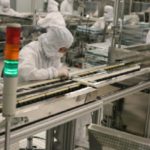
The October explosion at Intel’s fab in Kiryat Gat, is expected to hurt the fourth quarter revenue by $300 million and gross margins by 200 basis points, according to Zinsner. The fab was inoperative for two weeks, putting the manufacturing strategy in a dilemma.
“We’re still assessing all of the wafers to see which ones are usable and which ones aren’t, so we’ll have to see whether there is an impact that stretches beyond that,” Zinsner said.
The Kiryat Gat fab mostly produces data centre chips using Intel 10 manufacturing process. The company plans to ramp up production at the facility by the end of this week. Intel has raised its 2026 capital investment forecast to $20 billion from earlier $18 billion and said it will continue to expand manufacturing capacity through 2027.
As the third quarter ended in September 2026, the company’s revenue rose 21 per cent to $16.51 billion, while due to soft demand in the PC segment, the business fell 5 per cent to $8.10 billion.Intel has been trying to turn around its fortunes since it was left behind by Nvidia, whose GPUs have dominated the AI boom, with contract manufacturing and foundry business, as key players of its revival strategy.