



While all electric vehicles (EVs) boast of reducing carbon emissions, Pune based Vayve Mobility has gone a step ahead with an electric four-wheeler partially powered by solar energy to suit urban sensibilities.
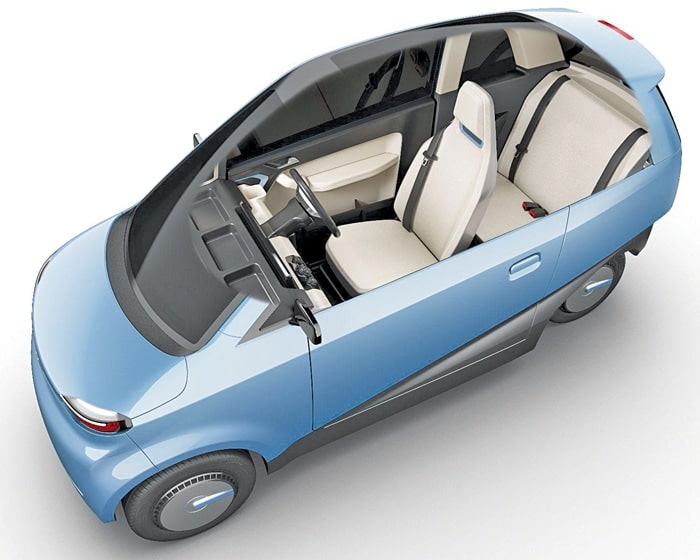
The electric mobility market in India has seen tremendous growth in the past five years due to increasing climate consciousness and reduced operational costs. While electric two-wheelers have found greater acceptance as the Indian consumer navigates through overly crowded roads, the absence of the comfort provided by a four-wheeler is very conspicuous.
To fill this void, Pune based startup Vayve Mobility has come up with an electric car with a solar photovoltaic roof designed to meet the needs of modern urban commuters. The compact two-seater car, called Eva, is designed with a focus on practicality and ease of use, to manoeuvre through traffic and park in tight spaces.
Incorporated in 2021, Vayve Mobility is the brainchild of Chief Executive Officer Nilesh Bajaj and Chief Technology Officer Saurabh Mehta, who started working on the project in 2019, along with Programme Manager Ankita Jain and Chief Operating Officer Vilas Deshpande. ìWe believe that although two-wheelers are convenient, they donít give you the safety and the comfort of a car. At the same time, a car need not be a five-seater, 500-kilometre range vehicle. We see this car as a completely new category between two-wheelers and four-wheelers of today, which is perfect for 90% of city commute,î says Bajaj.
The novelty of the car lies in the solar-panelled roof that provides an additional source of power, reducing the dependence on traditional electricity sources. Bajaj claims that the solar roof gives the car an extra range of 10 to 12 kilometres every day. With almost 300 solar days across the country, one can travel for at least 3,000 kilometres (more) using solar every year. Most people travel less than 10,000 kilometres a year. So, more than 30% of your travel can happen purely from solar, which is significant, says Bajaj.
With a range of more than 250 kilometres, which would require charging only once or twice a week, Eva can be fully charged in four hours using a 15A electrical socket at home. The car boasts of its ability to support CCS2 DC (combined charging system type 2 direct current) fast charging and can charge up to 80% in an hour.
The unique inclusion of the solar panel did not come without its fair share of hurdles. The challenge, as explained by Bajaj, lay in integrating the solar panel with the rest of the car, as the carís motor and battery operate on a higher voltage as compared to the voltage of the solar panel. Vayve has created a multi-stage buffer system which stores the energy that is generated by the solar panel in interim buffers. This energy is then boosted up from the intermediate buffer to the main traction battery voltage.
Adding to the distinctive details of the battery pack, Bajaj says, ìWe have a case for capturing the energy, and whenever the battery is not discharging, you can transfer the energy to the main battery.
Eva comes with a modular and rent-serviceable liquid-cooled battery pack. Each module can be independently replaced and serviced, to the cell level. Bajaj says that achieving this feat with cylindrical cells, in a module that is laser welded, is very difficult. ìIt is very hard to do servicing without damaging the cell. We have a design where we can do that along with single-sided endplate cooling, which again improves the lifecycle of the cells and improves safety due to better exhaust gas management in the event of a thermal runaway.
The components for the partially solar-powered car have been sourced from within the country, except the computer chips and lithium battery cells, which have been imported from Taiwan, China, and Korea. The company is in talks with many tier-one suppliers for the supply of components for manufacturing and assembly.
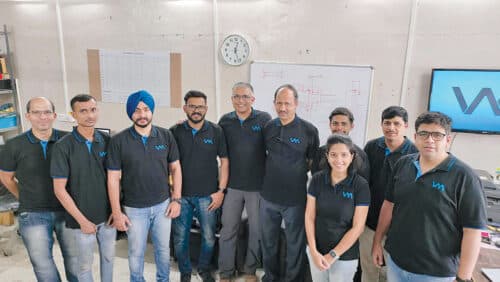
The startup plans to commercially release the car in 2024 and is currently looking to secure funding from institutional investors. With a core team of ten to twelve people, Vayve Mobility is looking to expand its workforce this year as it is developing another vehicle on a similar platform full-time for commercial electric taxis with a seating capacity of four passengers, a driver, and ample space for luggage.
ìIn the next two to three months, we will complete our prototype of the commercial vehicle and make a soft launch. In parallel, we are also making changes to Eva based on the feedback weíve received from prospective customers during and after the Delhi Auto-Expo. So, our target would be to complete the engineering for both the projects in the next 12 months, says Bajaj.

