
Tata Motors joins Motown chorus, raises concerns on EV deadline

The auto industry might be making big strides towards electric mobility by showcasing new launches and concepts in the upcoming Auto Expo but the concerns on high investments and infrastructure remain.
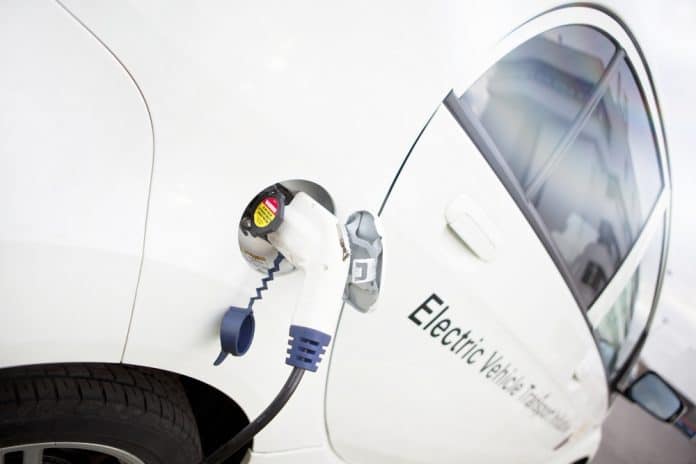
Image for representational purpose only

Unless there are enough incentives for companies to set up infrastructure related to electric mobility, besides a firm policy to push up the adoption, the government’s mission of full electric mobility by 2030 will not be met, according to a senior executive from an automobile major.

Tata Motors CEO and MD Guenter Butschek on Tuesday said the government’s vision of attaining 100% electrification of public transport and 40% of personal mobility by 2030 is a ‘huge challenge’ that will require a single-minded focus. “It is a huge challenge, from a vision point of view; from an aspiration point of view, it is a good timeline. But in order to get even close to it, we need to draft and translate it into a policy.”

In December last year, Mercedes-Benz had urged the government not to rush with the all-electric vehicles (EV) push foreclosing better technological options for future generations as the rest of the world is racing to run on hydrogen and not electricity.

It also said a less ambitious plan of promoting e-cars should be adopted as a nationwide electrification of the auto industry is just not viable both commercially and technologically.

- Advertisement -

Earlier in 2015, the government had launched a scheme — Faster Adoption and Manufacturing of Hybrid and Electric Vehicles (FAME) to promote clean fuel technology cars which could not find success.

India imports over 80% of its oil requirements, and the oil import bill is expected to touch $85 billion this year. Besides, a need for reduction of pollution, the government also needs to reduce its carbon emissions by 2030 which is why there is a focus on finding alternatives to fossil fuel.

Earlier, DNA Money had reported that the push and pull between the government and auto companies remains as the latter is still not confident about meeting the deadline of 2030. SIAM had also submitted a White Paper on electric vehicle to the government indicating 100% electric for public mobility and 40% electric for personal mobility by 2030 and taking it further for a complete shift to electric vehicle regime by the 100th year of India’s independence.

Abhay Firodia, president, SIAM, had said that the proposed policy measures in the White Paper would be needed for creating a robust market and manufacturing eco-system for electric vehicles in the country and such a policy must be sustained over time to remain stable to enable the industry to commit to investments with full confidence.

Butschek said, on an assumption, that Indian passenger vehicles market will touch around 10 million units annually by 2026, around 20% — 2 million– could be EVs and the rest ICE, with a good portion hybridised.

The incentives must be directed towards full EVs alone as the industry would have to develop other technologies such as hybrids in order to meet regulatory requirements going ahead.

This is required to help the EV technology stand on its feet, create scale and help achieve economies of scale to attract the attention of different players to commit on the investment in building the electrification infrastructure for mobility, he said.

As far as hybridisation is concerned, it will be the bridge during the transition from ICE to EVs. There is a requirement of huge investments in infrastructure and ecosystem, where incentives must be targeted. “You need to incentivise in order to make it attractive (for buyers) to spend more for possibly a small car, which is probably less aspirational in its appearance or in its segment that the same money on a hybridised larger car,” he said.


- Advertisement -
Loading form…

Industry's Buzz

SK Hynix

SK Hynix Backs Optical Interconnects for AI

0
South Korean memory maker backs co-packaged optics to replace copper links and break the 'AI memory wall' in data centres.  South Korean semiconductor giant SK...
Representational image of a satellite

Finnish SAR Imagery Specialist Forms Its India Unit

0
The formation of ICEYE India follows the formation of its German subsidiary last month. The move aims to tap into, what the company describes...
Nexperia

Europe-China Differences Leads to a Split in Nexperia

0
The Dutch chipmaker’s China unit said that a new production line which will produce 12-inch silicon wafer up to 100 percent domestically will be...

Kaynes Technology, BOSGAME Sign MoU To Expand In India

0
The partnership will also explore opportunities for product localisation, value addition, and greater participation in India’s growing electronics ecosystem Kaynes Technology India Limited and BOSGAME...
Piyush Goyal, Minister of Commerce and Industry, Government of India

India, Japan to Deepen Semiconductor and AI Cooperation During Goyal’s Visit 

0
Dedicated semiconductor and AI discussions will anchor Piyush Goyal’s Japan visit, with India seeking greater Japanese investment and technology partnerships. Union Commerce and Industry Minister...

Learn From Leaders

(L-R) Nikesh Gondchawar, Strategic & Technical Advisor – Robotics Manufacturing; Shrikrushna Kakade, Founder Partner; Nikhil Kakade, Senior Technical Advisor – Robotics & Control Systems, SlightGen Solutions LLP

“A Made-In-India Robotic PCB Soldering System That Automates The Through-Hole Soldering Process!” – Shrikrushna...

0
Electronics manufacturing is complex, and automation often comes at a high cost. To bridge this gap and offer a more affordable solution in India,...
Navdeep Narula, Executive Director, Client and Endpoint Solutions, Ingram Micro, India

“Enterprise Computing Is Shifting From CPU to GPU And Now Toward NPU-Based Systems ”...

0
The shift from CPU to GPU to NPU-based computing is redefining today’s enterprise endpoints. In an exclusive conversation, Navdeep Narula from Ingram Micro discusses...

India’s Robotics Push Opens New Hardware Opportunities

0
How do you build India’s physical AI future when critical robot components still come from overseas? Niqo Robotics reveals where the gaps remain.  India’s push...
Gadhadar Reddy, CEO and Founder, NoPo Nanotechnologies

How A Material Thinner Than Human Hair Could Transform EV Batteries And Electronics –...

0
What if a material 200,000 times thinner than a human hair could transform EV batteries, semiconductors, and advanced electronics? NoPo Nanotechnologies is making that...
Raja Rajeev Kumar, Mentor at IIT Startups, Chairman of the Board of Trustees, LaxmiRamaVarma Holdings International, and Founder and CEO, ChromoSoul Ventures

“Build Strong Startups, and Funding Will Follow”- Raja Rajeev Kumar, IIT Startups, LaxmiRamaVarma Holdings...

0
While AI and software startups attract attention and capital, electronics ventures often struggle for both. Raja Rajeev Kumar from IIT Startups, LaxmiRamaVarma Holdings International...

Startups

Akshar Vastarpara, Founder and CEO, Vicharak

“Our SBCs Are Designed As Complete Edge-Computing Platforms That Combine Everything On A Single...

0
An Indian startup builds affordable edge AI boards for robots, drones, and industry, positioning them as Raspberry Pi alternatives. In an EFY interview with...
(L-R) Sri Kusulu Devalla, Co-Founder and Hetendra Singh Rathore, Founder, Segritech

“We don’t just sort fruit; we match every quality grade with the right buyer.”...

0
An agritech startup has developed an AI-powered machine that sorts and grades fruits directly on farms, helping reduce post-harvest losses by connecting produce with...
Dr Naveen Yanduru, CEO, Axiro Semiconductor Private Limited

“India Can Lead In IP—If It BacksIts Own Builders”

0
Axiro Semiconductor designs RF and satellite chips, ships millions worldwide, and retains its startup mindset while tackling complex technical challenges. In a conversation with...
Dr Sanjay Ahuja, Founder and CEO of Cionlabs, India

“We are solving India-specific challenges rather than offering generic ‘black box’ IoT solutions.”

0
From hybrid mesh networking to AI-enabled edge devices, an Indian IoT startup is developing home-grown solutions to improve connectivity, strengthen privacy and support the...
RTLS

Amimotion’s World-Smallest UWB Tags That Give Factories A Digital Nervous System For Physical AI

0
A Bengaluru startup is turning factories into intelligent spaces with tiny UWB tags, AI-powered visibility, and real-time tracking that can automate workflows, improve safety,...