
Tata Motors joins Motown chorus, raises concerns on EV deadline

The auto industry might be making big strides towards electric mobility by showcasing new launches and concepts in the upcoming Auto Expo but the concerns on high investments and infrastructure remain.
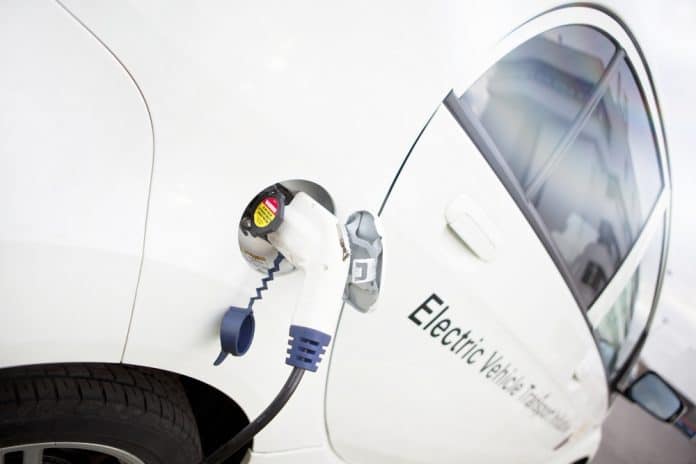
Image for representational purpose only

Unless there are enough incentives for companies to set up infrastructure related to electric mobility, besides a firm policy to push up the adoption, the government’s mission of full electric mobility by 2030 will not be met, according to a senior executive from an automobile major.

Tata Motors CEO and MD Guenter Butschek on Tuesday said the government’s vision of attaining 100% electrification of public transport and 40% of personal mobility by 2030 is a ‘huge challenge’ that will require a single-minded focus. “It is a huge challenge, from a vision point of view; from an aspiration point of view, it is a good timeline. But in order to get even close to it, we need to draft and translate it into a policy.”

In December last year, Mercedes-Benz had urged the government not to rush with the all-electric vehicles (EV) push foreclosing better technological options for future generations as the rest of the world is racing to run on hydrogen and not electricity.

It also said a less ambitious plan of promoting e-cars should be adopted as a nationwide electrification of the auto industry is just not viable both commercially and technologically.

- Advertisement -

Earlier in 2015, the government had launched a scheme — Faster Adoption and Manufacturing of Hybrid and Electric Vehicles (FAME) to promote clean fuel technology cars which could not find success.

India imports over 80% of its oil requirements, and the oil import bill is expected to touch $85 billion this year. Besides, a need for reduction of pollution, the government also needs to reduce its carbon emissions by 2030 which is why there is a focus on finding alternatives to fossil fuel.

Earlier, DNA Money had reported that the push and pull between the government and auto companies remains as the latter is still not confident about meeting the deadline of 2030. SIAM had also submitted a White Paper on electric vehicle to the government indicating 100% electric for public mobility and 40% electric for personal mobility by 2030 and taking it further for a complete shift to electric vehicle regime by the 100th year of India’s independence.

Abhay Firodia, president, SIAM, had said that the proposed policy measures in the White Paper would be needed for creating a robust market and manufacturing eco-system for electric vehicles in the country and such a policy must be sustained over time to remain stable to enable the industry to commit to investments with full confidence.

Butschek said, on an assumption, that Indian passenger vehicles market will touch around 10 million units annually by 2026, around 20% — 2 million– could be EVs and the rest ICE, with a good portion hybridised.

The incentives must be directed towards full EVs alone as the industry would have to develop other technologies such as hybrids in order to meet regulatory requirements going ahead.

This is required to help the EV technology stand on its feet, create scale and help achieve economies of scale to attract the attention of different players to commit on the investment in building the electrification infrastructure for mobility, he said.

As far as hybridisation is concerned, it will be the bridge during the transition from ICE to EVs. There is a requirement of huge investments in infrastructure and ecosystem, where incentives must be targeted. “You need to incentivise in order to make it attractive (for buyers) to spend more for possibly a small car, which is probably less aspirational in its appearance or in its segment that the same money on a hybridised larger car,” he said.


- Advertisement -
Loading form…

Industry's Buzz

Prime Minister Modi

Modi Flags 6G And Domestic Electronics Production At IMC 2026

0
Prime Minister Narendra Modi has outlined India's next telecom priorities at India Mobile Congress 2026, linking the 5G-to-6G roadmap with semiconductor production, domestic electronics...
Fujitsu

Fujitsu-Owned 1Finity Deploys 200+ Engineers To Expand India’s Optical Networking Business

0
Japan’s Fujitsu-owned 1Finity is expanding its India networking business with more than 200 engineers as AI and data-centre growth drives demand for optical networking...
Mivi factory

Mivi Targets Indigenous Smartphone Design With In-House Electronics Engineering

0
Indian consumer electronics brand Mivi aims to develop an indigenously designed smartphone within 12 months by building in-house circuit design, PCB and software engineering...
GlobalFoundries logo

GlobalFoundries and TSMC Partner on US Interposer Production for CoWoS

0
Five-year agreement expands Malta, New York fab to create domestic supply chain for high-performance AI chips. GlobalFoundries (GF) has reached an agreement with TSMC to...

Vietnam Plans US$136.3 Billion Investment in Power Generation and Grids by 2030

0
The revised plan also targets 10,000–16,300 MW of battery energy storage capacity by 2030 Vietnam is planning investments of approximately US$136.3 billion in power generation...

Learn From Leaders

Does India’s Chip Packaging Growth Need Local Materials At Scale?

0
What will it take for specialised semiconductor materials manufacturing to grow in India? Packaging volumes will be a key factor as OSAT facilities move...
Ronak Kumar Samantray, Founder, TM2Space Technologies Pvt Ltd.

“Our goal is to build data centres in space.” – Ronak Kumar Samantray, TM2Space

0
A space startup aims to build orbital data centres, letting users run AI models and store data on satellites while also supplying satellite hardware...

India’s Photonics Puzzle Is Finally Coming Together 

0
Can India turn its scattered photonics capabilities into a stronger industry? A new association aims to connect the ecosystem and strengthen the domestic value...
Jin Bains, CEO, Mini-Circuits

Mini-Circuits CEO Jin Bains on Navigating High-Frequency Component SWaP-C Constraints, Emerging Markets, and Career...

0
In this exclusive, Jin Bains, Chief Executive Officer (CEO) of Mini-Circuits, explains in a conversation with Dilin Anand of EFY about areas of emerging...

India Needs Not a Hundred, But Thousands of Chip Diversified Companies 

0
Can India build a semiconductor ecosystem beyond fabs? Indiesemic believes thousands of diversified chip companies are needed to make that possible. India’s semiconductor push is...

Startups

PowerMon

Aquaexchange Brings Monitoring And Automation To Shrimp Farming

0
The startup has developed an AI- and IoT-enabled platform that helps shrimp farmers manage farms, access financing, monitor operations, and connect with markets. The startup...

Drone-Like Aircraft For Logistics From BluJ Aerospace

0
Hyderabad-based BluJ Aerospace is developing indigenous electric and hydrogen-powered vertical take-off and landing (VTOL) aircraft for remote cargo transport. BluJ Aerospace, a Hyderabad-based aerospace startup...
Jash Jetly, Co-founder and CEO of EVE

“The cloud isn’t the only way to run AI. We’re proving it can happen...

0
A startup is building a decentralised AI and communication network that runs across everyday devices instead of centralised cloud servers. In an interview, Jash...
Mohit Gupta, founder and CEO, TYLsemi

Building AI Chips, One Block at a Time 

0
What if building an AI chip became as simple as assembling reusable blocks? The startup is working to make custom silicon accessible beyond the...
Seema Johar, Co-Founder and Product Director, Compcarta Solutions Pvt Ltd

“We Let Designers Focus on Innovation, Not Infrastructure.”- Seema Johar, Compcarta Solutions

0
In an exclusive interview, Seema Johar of Compcarta speaks with EFY’s Akanksha Sondhi Gaur about why setting up an EDA environment can be harder...