US Imposes Restrictions On 140 Chinese Firms, The Third Major Crackdown In Three Years

The USA’s Foreign Direct Product (FDP) rule now includes crucial equipment from Malaysia, Singapore, Israel, Taiwan, and South Korea, while exempting the Netherlands and Japan.

In a bid to solidify the USA’s semiconductor industry and hinder China’s advancement in semiconductor manufacturing and artificial intelligence (AI) technologies, the US government has again implemented its third major crackdown in three years on China’s semiconductor industry, imposing new export restrictions on 140 Chinese companies, including Naura Technology Group. 

The initiative to curb Beijing’s chipmaking ambitions is set to impact Chinese chip tool manufacturers Piotech and SiCarrier Technology through new export restrictions. This strategy also targets advanced memory chip shipments and additional chipmaking tools to China. The action represents one of the Biden Administration’s significant final attempts to disrupt China’s capability to access and produce chips that could bolster advancements in artificial intelligence, particularly for military purposes, thereby safeguarding U.S. national security from potential threats.

The new restrictions impose significant limitations on shipments of high bandwidth memory (HBM) chips to China, crucial for advanced applications like AI training. Additionally, there are fresh limitations on 24 more chipmaking tools and three essential software tools, alongside export controls affecting chipmaking equipment produced in countries such as Singapore and Malaysia. Notably, nearly two dozen semiconductor firms, a couple of investment companies, and over 100 chipmaking tool manufacturers in China will be impacted by these stringent measures, according to sources.

U.S. lawmakers and the Commerce Department have identified several companies, including Swaysure Technology Co, Qingdao SiEn, and Shenzhen Pensun Technology Co, as key partners of China’s Huawei Technologies. Once constrained by stringent U.S. sanctions, Huawei has emerged as a leader in advanced chip production and development within China. To protect national interests, these companies will soon be added to the entity list, which prohibits U.S. suppliers from engaging in trade with them without first obtaining a special license. This action underscores the urgency of safeguarding technology and ensuring compliance with U.S. regulations. 

- Advertisement -

In a significant move, the U.S. is set to add two key players in the chip investment sector to the entity list for the first time. Chinese private equity firm Wise Road Capital and technology firm Wingtech Technology Co will be included. This decision underscores the challenges companies face, as those seeking licenses to ship to firms on the Entity List typically encounter denials.

The measures include expanding the Foreign Direct Product (FDP) rule to encompass equipment from countries such as Malaysia, Singapore, Israel, Taiwan, and South Korea, while exempting the Netherlands and Japan. This expansion allows the U.S. to regulate any foreign-produced item shipped to China if it contains any U.S. chips, effectively lowering the threshold of U.S. content that triggers U.S. control to zero. 

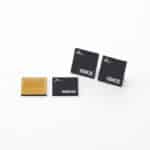
A recent regulation imposes limitations on the memory utilized in AI chips that meet the specifications of “HBM 2” and beyond, which are produced by leading manufacturers like Samsung and SK Hynix from South Korea, as well as Micron from the U.S. Industry insiders believe that only Samsung Electronics will face significant repercussions from this ruling. This latest set of restrictions marks the third significant wave of chip-related export limitations directed at China under the Biden administration, underscoring a pivotal shift in tech export policies that aim to protect national interests.

- Advertisement -
Loading form…

Industry's Buzz

SK Hynix HBM3E

SK Hynix Registers Q3 Profit Increase of 630%

0
Despite concerns of overvaluation with investments in AI data centres, the sector has transformed SK hynix’s fortunes. SK hynix, on Wednesday reported an operating profit...

Waaree Energies to Venture into Data Centre Business

0
The decision by Waaree comes even after a 15 per cent decline in consolidated net profit of the company in the September quarter of...
NVIDIA CEO Jensen Huang

Nvidia considering $2000 per GPU Software License

0
The software operations of Nvidia, which as of now generate $1 billion annually, are set to become a major part of the company’s business. Nvidia...
Representational image of automotive electronics

GÖPEL Electronic, Microchip Expand ASA-ML Collaboration

0
The integration will enable the company’s Video Dragon platform to test and simulate ASA-ML components GÖPEL Electronic and Microchip Technology are expanding their collaboration in...
STMicroelectronics

STMicroelectronics Expands Automotive Safety Sensing For Mass-Market Vehicles

0
STMicroelectronics is bringing four integrated automotive MEMS safety sensors into production. STMicroelectronics has introduced four automotive combination sensors that integrate multi-axis accelerometers and gyroscopes (angular-rate...

Learn From Leaders

Pravin Patel, Founder and Chairman, Brio Agri, India

“Our goal is not to replace farmers, but to empower them with better tools,...

0
In an exclusive interaction with EFY's Saba Aafreen, Pravin Patel, Founder and Chairman of Brio Agri, discusses building hydroponics and controlled-environment agriculture in India,...

Does India’s Chip Packaging Growth Need Local Materials At Scale?

0
What will it take for specialised semiconductor materials manufacturing to grow in India? Packaging volumes will be a key factor as OSAT facilities move...
Ronak Kumar Samantray, Founder, TM2Space Technologies Pvt Ltd.

“Our goal is to build data centres in space.” – Ronak Kumar Samantray, TM2Space

0
A space startup aims to build orbital data centres, letting users run AI models and store data on satellites while also supplying satellite hardware...

India’s Photonics Puzzle Is Finally Coming Together 

0
Can India turn its scattered photonics capabilities into a stronger industry? A new association aims to connect the ecosystem and strengthen the domestic value...
Jin Bains, CEO, Mini-Circuits

Mini-Circuits CEO Jin Bains on Navigating High-Frequency Component SWaP-C Constraints, Emerging Markets, and Career...

0
In this exclusive, Jin Bains, Chief Executive Officer (CEO) of Mini-Circuits, explains in a conversation with Dilin Anand of EFY about areas of emerging...

Startups

Manish Seth, Founder, Vimag Labs

Beyond Rare-Earth Magnets: How Vimag Labs Is Reimagining Electric Motors – Manish Seth, Vimag...

0
Can software replace rare earth magnets in electric motors? Manish Seth of Vimag Labs speaks to EFY’s Nitisha Dubey about Virtual Magnet Technology, which...
Pavan Kosaraju, Founder of AquaExchange

“Our AI Predicts Shrimp Disease Three To Four Days Before Visible Symptoms Appear.”- Pavan...

0
An agritech startup has built AI- and IoT-powered solutions that help shrimp farmers monitor ponds, detect diseases early, automate feeding, and reduce operational risks....
Pranay Rebala, Vice President of Product, BluJ Aerospace

“Rather Than Waiting For The Technology To Mature, We Are Ready For The Next...

0
Can battery-electric and hydrogen propulsion coexist in future VTOL aircraft? BluJ Aerospace sees complementary roles for both, with batteries powering shorter-range flights and hydrogen...

UST Selects 19 Startups for D3 Startup Challenge 2026 in Bengaluru

0
The programme is designed to identify technologies that address business challenges, assess their practical applications and determine their potential to scale UST, an AI and...

Compcarta Reduces The Cost And Complexity Of End-To-End Chip Design

0
Building a chip should not require assembling an entire design ecosystem. A Noida-based startup is developing a browser-based EDA platform that aims to reduce...