



As the memory shortage might continue in 2027, the smartphone market will remain under pressure for the rest of 2026
According to preliminary estimates from Counterpoint Research’s Market Monitor, Global smartphone shipments declined 11 per cent year-on-year (YoY) in the second quarter of 2026, marking the weakest second-quarter performance since 2013.
The reason for the downturn was primarily due to the ongoing global memory shortage, which pushed up dynamic random access memory (DRAM) and NAND prices and forced smartphone makers to increase device prices, particularly in the entry and mid-range segments.
Samsung has again made its name in the global smartphone market’s top spot with a 24 per cent share. With this growth, the company has become one of the top five brands. The major benefit has been earned by the tremendous sales of its Galaxy S26 series, especially the Ultra variant, along with better product availability, aggressive promotional campaigns, and stable pricing in markets such as India and the Middle East.
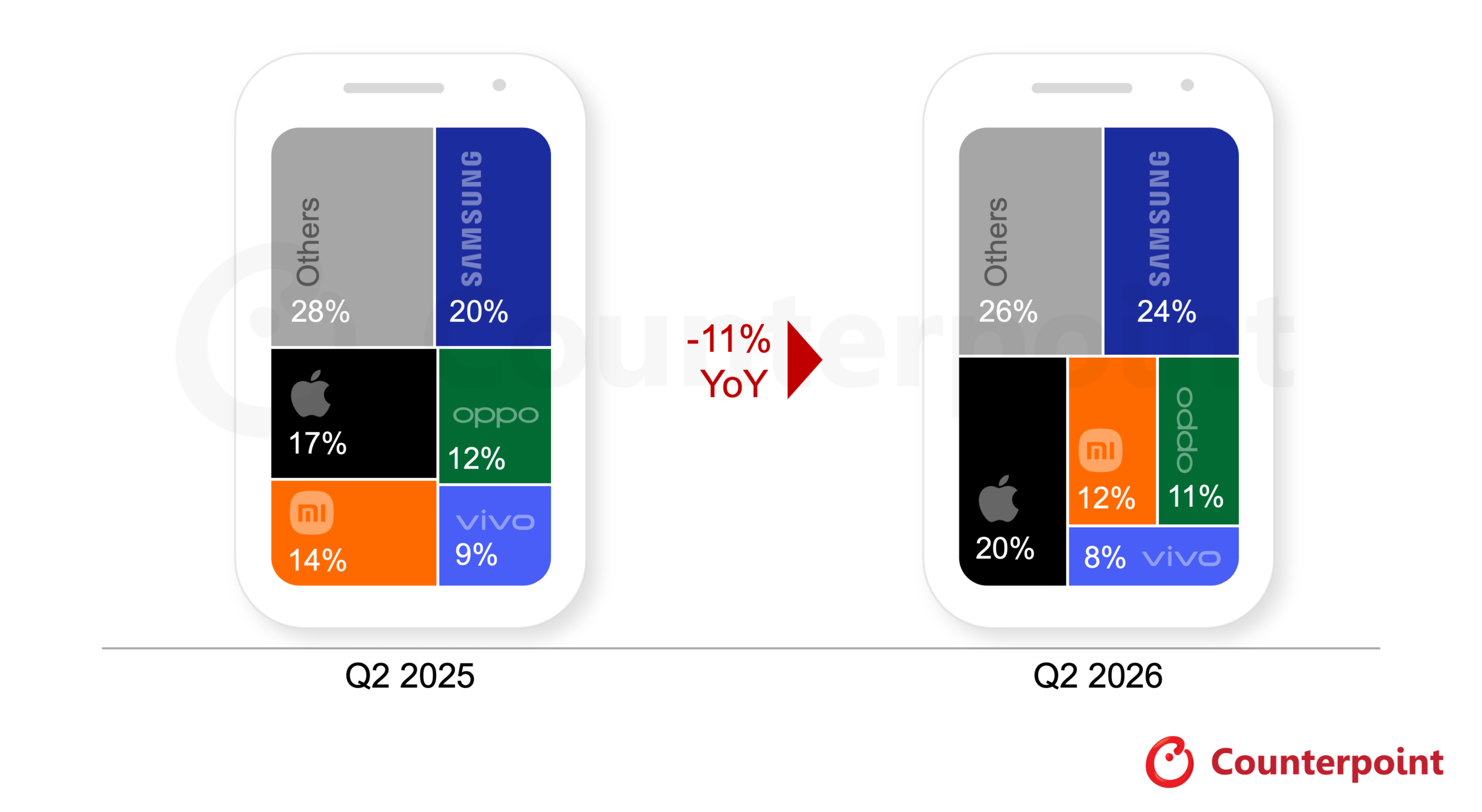
Apple set a record, reaching 20 per cent market share after growing its shipments by 3 per cent YoY. The brand is the only smartphone vendor that avoided price hikes during the quarter, supported by sustained demand for the iPhone 17 series. However, the company continued to face weaker demand in China despite promotional efforts ahead of the country’s 618 shopping festival.
In contrast, Xiaomi, OPPO, and vivo recorded double-digit shipment declines as rising memory costs dampened demand in price-sensitive segments. Xiaomi managed to retain a 12 per cent market share by streamlining its product portfolio and easing retailer financing, while OPPO and vivo captured 11 per cent and 8 per cent market shares, respectively.
Apart from the top five, Google and Huawei showcased shipment growth of 16 per cent and 6 per cent YoY. The reason is the strong demand for the Pixel 10 series and Huawei’s Mate 80, Nova 15, and Enjoy 90 smartphones.
As the memory shortage might continue in 2027, the smartphone market will remain under pressure for the rest of 2026, according to Counterpoint. Original equipment manufacturers (OEMs) are expected to prioritise higher-value products, reduce low-margin models, and expand refurbished and older-generation offerings as consumers delay upgrades. Premium smartphones are expected to remain relatively resilient, supported by AI-driven features, financing options, and ecosystem loyalty.

