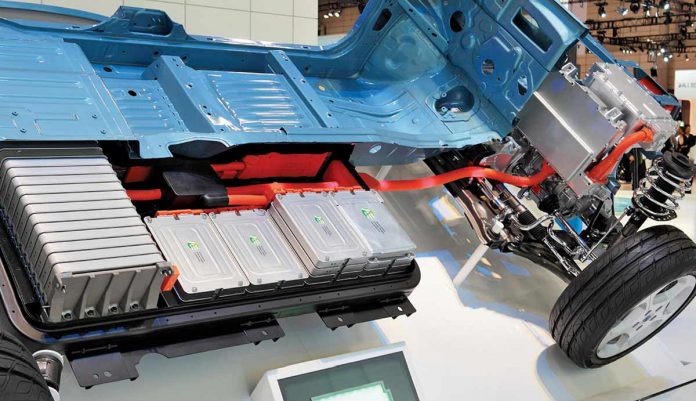

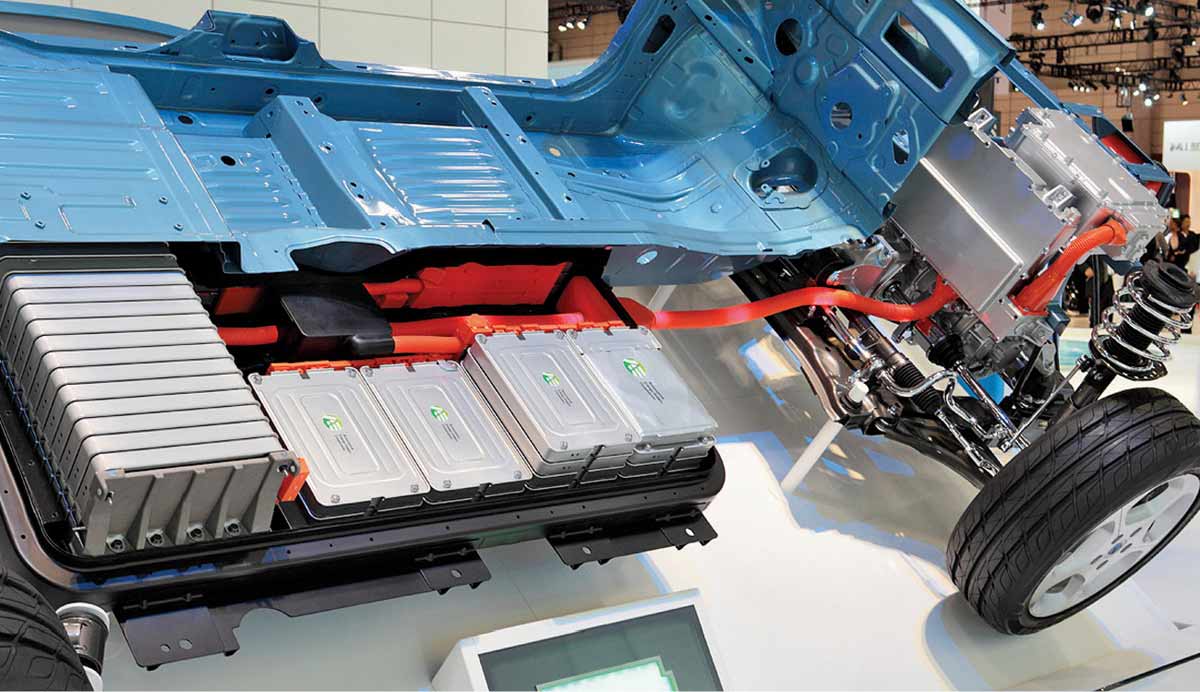
 As the popularity of green energy increases, more and more electric vehicles (EV) are expected to drive onto Indian roads in the coming years. Batteries are, therefore, emerging as the most important energy storage devices. To monitor and control the untimely damage of EV batteries, manufacturers are focusing on efficient battery management systems (BMS).
By Shruti Mishra
Because of their innumerable advantages, such as the high specific-energy, their high-energy density and low self-discharge rates, lithium-ion (li-ion) batteries are swiftly becoming the main choice of EV makers. However, these battery cells also come with two critical design challenges—of overcharging and undercharging. This means charging any Li-ion cell to 100 per cent of its state-of-charge (SOC) or discharging it to 0 per cent SOC can permanently degrade their capacity. Therefore, to ensure that a battery does not get charged above or below its limits and to achieve accurate SOC, EV makers are relying on efficient battery management systems (BMS). They consider the BMS as the brain behind battery packs, which controls the output, charging and discharging, and also provides notifications on the status of the battery packs, with the help of sensors.
Why BMS?
The primary goal of a BMS is to protect the cell and to keep the battery operating within its safety zone. In addition to this, a BMS performs three vital tasks —state-of-health (SOH) determination, cell balancing and communication. To ensure the longevity of the battery, the BMS acts as an indicator of the battery’s SOH, measuring its general condition and its ability to to deliver the specified performance, when compared to a fresh battery.
Cell balancing is critical for high-powered battery packs because a long series of individual cells is only as reliable as the weakest cell. A BMS maintains cell balancing in EV batteries by compensating the load of the weaker cell. It equalises the charge on all cells in the chain to extend the overall life of the battery pack. In this way, a BMS prevents individual cells from becoming overstressed.
Then comes the most vital communication feature of a BMS, whereby it uses a data link to monitor performance, log data, provide diagnostics or set system parameters. However, the choice of the communications protocol is not determined by the battery but rather, what the battery is being used for. EV makers insist that the BMS used in the vehicle must communicate with the upper vehicle controller and the motor controller to ensure the proper and smooth operation of the vehicle.
In recent times, EV makers have been using different varieties of BMS to avoid battery failure, but the most common type is a battery monitoring system that records the key operational parameters such as voltage, current and the internal temperature of the battery, along with the ambient temperature during charging and discharging. In this mechanism, the system sends inputs to the protection devices, in response to which monitoring circuits generate an alarm, and even disconnect the battery from the load or charger if any of the parameters exceed the values set by the safety zone.
Since the battery is the only powering source in pure EVs, it is advisable that a BMS in such applications includes both battery monitoring and protection systems. One system will help in keeping the battery ready to deliver full power when necessary and another system will extend the life of the battery. Beyond this, a BMS should also include the systems that monitor the charging regime and the management of thermal issues. In a nutshell, inside an electric vehicle, the BMS is part of a complex and fast-acting power management system.
Evaluating the specifications of a BMS
Before picking any specific battery management system architecture, there are four factors that need to be evaluated very carefully in order to meet the need and expectations of the end customer.
Accuracy: EVs tend to be noisy due to the electromagnetic intervention over a wide range of frequencies. Such noises hamper the overall accuracy and any loss of accuracy will adversely affect battery pack longevity and performance. Therefore to utilise maximum possible capacity, a battery monitoring system needs to be accurate.
Reliability: EV manufacturers are required to meet extremely high reliability standards irrespective of the power source. Li-ion batteries used in EVs are potentially more volatile in nature and therefore give rise to major safety concerns. To minimise safety failures, a well-designed battery pack system is needed that has robust communication, minimised failure modes, and fault detection. A BMS enhances a battery pack’s reliability by accurately measuring the voltage of each individual cell.
Manufacturability: A BMS minimises the total number of components and connections required in a battery pack, hence reducing the weight of the pack and enabling the electric vehicle to meet the stringent weight and size constraints.
Cost: The battery monitoring system must minimise the need for additional and relatively costly components, like microcontrollers, interface controllers and galvanic isolators, and thus significantly reduce the overall system cost.
Recent trends
For the new models of electric vehicles, designers are looking for ways to improve the performance and reliability of the BMS as they gravitate towards higher production volumes. However, the desired output cannot be achieved with the sophisticated electronics and complex wiring systems that are currently used in EVs. So, to minimise the wiring issues, researchers have developed wireless battery management systems that not only improve reliability but also enable new features. Such BMSs are implemented in EVs using technologies like SmartMesh or the Zigbee communication protocol. The biggest advantage of wireless connectivity is that it provides flexibility in where the battery modules can be placed, which makes it easier for the manufacturers to customise the size. This flexibility also makes it possible to install sensors in a BMS, in locations that would be unsuitable for a wiring harness.