The German luxury carmaker is banking on its next-generation Neue Klasse platform to revive sales in China, where local EV brands are setting the pace with faster product cycles and advanced technology.
BMW is pinning its hopes on its Neue Klasse electric vehicle platform to revive its business in China after two years of declining sales, even as domestic automakers continue to strengthen their lead in the world’s largest EV market.
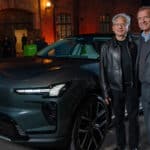
According to The Economic Times, BMW’s first China-specific Neue Klasse model, the iX3 SUV, is planned to go on sale in November. The launch comes after the company’s China sales dropped drastically, including a 30 per cent decline in the second quarter.
Analysts say BMW has struggled to keep pace with Chinese rivals, which now makes new electric vehicles in nearly half the time taken by many traditional automakers. Local brands such as Nio, Zeekr and Xiaomi have gained ground by offering intelligent features, faster innovation and products better suited to Chinese buyers.
“If this had launched two years ago it could have been a game-changer. In today’s Chinese auto market, it is hard to stand out,” Yale Zhang, managing director of Automotive Foresight, told The Economic Times.
The challenge extends beyond BMW. Mercedes-Benz and Audi have also reported weaker sales in China. EVs now account for about 46 per cent of all vehicle sales in the country, while only around 5 per cent of BMW’s China sales are fully electric, according to Global Mobility data.
BMW said its China strategy focuses on integrated digital services, connectivity features and customer safety through extensive testing. However, industry experts believe price cuts alone are unlikely to restore growth, arguing that Chinese consumers increasingly prioritise cutting-edge technology over brand heritage.
“Overall, it’s clear that BMW is one step behind,” Wang Xianbin, vice president of the Gasgoo Research Institute.