In the U.S., gallium is recovered as a byproduct of well-established, high-volume aluminium refining operations
A new research and development collaboration has been signed by Indium Corporation and Ames National Laboratory to enhance U.S. production of gallium, which is a critical material used in semiconductors and electronics, including smartphones, LED lighting, and optoelectronics
The new partnership will focus on making the technologies required to set a domestic supply chain for an element that currently relies almost exclusively on imports.
“This collaboration brings together the teams’ advanced research capabilities and deep materials expertise to address a critical gap in the U.S. supply chain,” Indium Corporation President and CEO Ross Berntson said. “By focusing on scalable, data-driven solutions, we’re confident our work will enable more reliable gallium access for the industries that depend on it—and position Indium Corporation at the forefront of a domestic supply chain that is increasingly vital to U.S. semiconductor and electronics manufacturing.”
“There are currently no domestic gallium production and no complete U.S. gallium supply chain,” said Ames Lab scientist and project leader Long Qi, an expert in chemical separations and catalysis. “The partnership goal is to change that, and the effort aligns well with the Department of Energy’s mission to develop critical materials production here.”
In the U.S., gallium is recovered as a byproduct of well-established, high-volume aluminium refining operations. Called the Bayer process, this method uses caustic liquids and high temperatures to extract and refine aluminium from raw ore. Gallium is typically present in the refining process waste in low concentrations of about 100 parts per million.
“Despite the low concentrations, we see an opportunity to develop a process that efficiently separates and extracts gallium as an additional high-value material from aluminium production,” Berntson said. “Indium Corporation’s experience as a materials refiner and smelter, and Ames Labs’ specialized techniques are the perfect union to make this happen.”
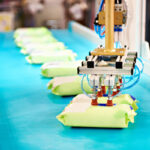
Ames Lab’s innovative robotic capabilities can perform a large number of experiments and generate high-quality data quickly. When paired with AI tools, the data can be rapidly analysed to uncover patterns, optimise processes, and guide the iterative design of materials. These accelerated workflows can shrink the development timeline from decades to as little as two to three years.
“By using our automated chemistry capabilities and AI tools, we can generate over 100 data points daily for our AI model,” Qi said. “This dramatically accelerates our timeline for developing a solution that surpasses current industry-leading materials.”
“This work is an important step toward unlocking new value from existing industrial processes,” said Robert Ploessl, Indium Corporation Product Manager for Metals and Compounds, and CRADA lead for the company. “By combining innovative materials development with practical scale-up pathways, we’re helping lay the groundwork for more resilient and sustainable sourcing of gallium and other critical elements.”