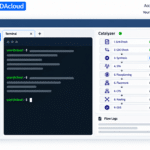
Cadence has launched an AI-powered engineering agent for automating printed circuit boards and chip packaging design, looking to reduce the time spent on design cycles and improve productivity.
Cadence Design Systems has launched its artificial intelligence-powered engineering agent named AuraStack to automate the design of PCBs and chip packages, adding to its bid to simplify complex engineering workflows, according to The Economic Times.
It enables engineers to use plain language to outline design intentions, after which the planning and execution of tasks will be completed using Cadence’s existing software to build and verify designs in a virtual environment.
Cadence said that with the use of Nvidia chips, AuraStack could up to 50% the company’s time-to-market while boosting productivity on several engineering tasks as much as 15 times.
In a demonstration of the new product, AuraStack has helped to redesign the 5G smartphone’s printed circuit board to make a lower cost alternative. In the process of making changes to the 5G smartphone’s printed circuit board for the less expensive edition, the agent suggests components integration that results in up to a 28% cost reduction and also suggests cheaper alternatives for the power management chip that is suitable for the layout. “The bottleneck is not in automation, it’s really in engineering intelligence,” Michael Jackson, the corporate vice president and general manager for Cadence’s system design and analysis group. He says the tool can intelligently reason about trade-offs between cost and performance.
According to The Economic Times, Cadence has said that early customers for AuraStack include Nvidia, TSMC, and Schneider Electric.
Jackson says that the clients have an option to integrate AuraStack with AI models like OpenAI’s ChatGPT, Google’s Gemini, Anthropic’s Claude and also other open-source options. The new AI-powered engineering agent is expected to go to market on a consumption-based pricing model later this year, and will be widely available by September, reported The Economic Times.