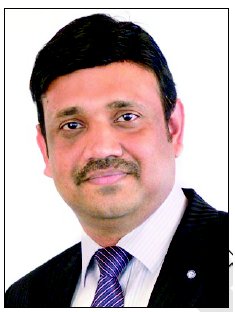

Monday, October 06, 2014: Electronics testing labs today are not only helping manufacturers to comply with government standards and regulations but also encourage the export of certified products. Suresh Kumar, vice president, product services, TUV SUD, speaks to Sneha Ambastha of EFY, about the increasing demand for certifications and hence, the growing opportunities for testing labs in India

EB: Why are testing labs and certifications essential in India?
There is greater awareness amongst consumers about the safety aspects of the electronics devices that they purchase. The word ‘safety’ is not only related to what we export but also to what we import (75 per cent of India’s electronics consumption is met by imports). As per the new regulations of the Bureau of Indian Standards (BIS), over 15 labs have been certified in India just to ensure that whatever is imported or manufactured in India meets certain standards. There are government policies, which prevent foreign countries from dumping low quality products in India, that need to be complied with.
EB: Can TUV SUD India’s testing centres be considered quality labs?
Every test lab needs to be certified for ISO17025 requirements and the TUV SUD labs in India are in the process of getting this certification. However, these labs are completely in line with the international requirements with respect to the criteria, quality, equipment selection, training of people, and the systems implemented. We have the same systems implemented across TUV SUD labs globally.
EB: How does the existence of quality labs that offer certification affect the Indian electronics industry?
The Government of India has limited resources to ensure that electronic products are produced and standards are met in time. So there is a huge push from retailers to ensure that products are tested and certified on time. This makes labs like ours an arm for the government, where we do the tests and release reports, based on which the government makes a decision on the registration of the products. Thus, one role these labs play is to support the government in ensuring compliance with local regulations. Second, labs in India assist manufacturers to meet global safety criteria by transferring the knowhow these labs have acquired overseas.
EB: What do you think are the major strengths, weaknesses and threats to these labs in India?
Their major strength lies in possessing the information required to operate on a global level, having the knowhow that includes the product’s requirements and the regulatory requirements of various countries. TUV SUD labs are accredited to certify products. We issue TUV SUD case marks and TUV SUD CE marking. The moment these products are certified by TUV SUD, the manufacturers get the leverage to export these products to Europe or the US.
For any consumer, three things are important—the country of origin, the price list and third party certification. So, having their products tested and certified by a German lab like TUV SUD enables manufacturers to export their products and increase their business.
Many of the products made in India are not able to meet either European or US requirements. Labs in India generally test for compliance with local regulations, and not for meeting foreign requirements. That’s a weakness.
As far as threats are concerned, the first is to the profitability of a lab. Costs are on the rise while the prices that can be charged for testing are falling due to the many testing facilities available. The second threat is the shortage of manpower. There are hardly any institutes to train personnel for quality labs and certifications. These labs are today hiring freshers and training them to meet high market demands.
EB: What are the major factors driving the growth of quality labs and the need for certification?
This is completely related to market growth. One factor is the growing usage of consumer electronics in India. For example, in 2003 we were using 18 million mobile phones and in 2010 we had about 172 million mobile phones. That is the pace of growth in consumer electronics, and users are getting more concerned about the safety of the products they are buying. So safety is slowly becoming a criterion in India.
EB: Are there any government policies enforced specifically for this industry in India?
A lab in India has to be certified by NABL for 17025—the lab accreditation system, which ensures that the quality of the lab meets international requirements. Our labs are already certified by BIS for other support, but we are still to get the certifications for electrical support.
There are also certain regulations that come through government organisations, globally. Certain segments like the automotive industry have a consortium of experts that formulates some special standards. For example, Forbes, Clintwear and General Motors have together come up with a few standards for the automotive industry.
EB: Are there any new application areas for testing and certification?
The manufacturing sector is an important application area where we ensure that sustainable practices are adopted. Our services are not limited to testing; we also try to support manufacturers by ensuring they implement proper systems and follow proper social compliance standards.
There is no Wi-Fi testing support at present, though Wi-Fi products are increasing. In fact the government is also encouraging photovoltaics. So a lot of new application areas can be seen ahead that will provide opportunities for the testing and certification industry to grow further.
EB: Have any new tools and test equipment been introduced recently?
The test equipment we use in labs in India are not very new. These have been used in many labs recently. What we are introducing is the software to manage the end-to-end operation of these labs — registration, entry of test results, report reviews and the report release are all completely automated. This is to ensure less manual intervention, systematic processes, confidentiality of documents, etc. The entire lab is managed by lab management software, which saves a lot of time, pre- and post-testing, and improves the overall turnaround time. This also helps to optimise the manpower and the source so that the customer knows the status of the report at any time. We have also introduced a platform called ‘E-Source’, where we upload the report. Customers can log in and review the status of the report on this platform.
Electronics Bazaar, South Asia’s No.1 Electronics B2B magazine