
Govt unveils draft National Auto Policy to promote green mobility

The government today sought stakeholders’ comments on a draft National Auto Policy, which seeks to promote clean and safe mobility and adopt a long-term roadmap to harmonise emission standards with global benchmarks by 2028.

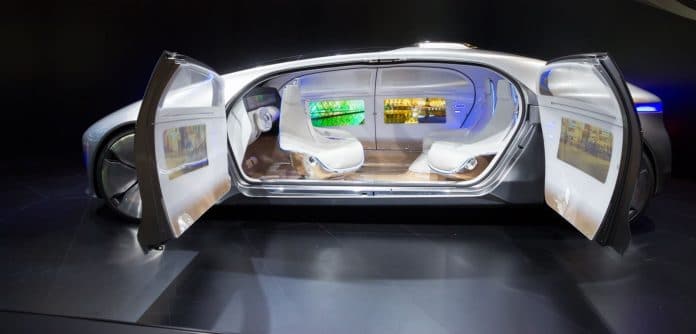
Image for representational purpose only

The policy also envisages propelling India’s automotive industry amongst the top three nations in the world in engineering, manufacturing and export of automotive vehicles and components.

The objective is “to provide a long-term, stable and consistent policy regime and to have a clear roadmap for the automotive industry, making India a globally competitive auto R&D and manufacturing hub and achieving the targeted objectives of green mobility, said the draft released by the Department of Heavy Industry.


One of the key components of the draft policy is to promote clean, safe, efficient and comfortable mobility for every person in the country, with a focus on environmental protection and affordability.

It also proposes creation of a nodal body with a two-tier structure having an Apex Body supported by the National Automotive Council (NAC).

- Advertisement -

The policy eyes adoption of a long-term roadmap for emission standards beyond Bharat Stage VI and harmonise the same with global standards by 2028. It also envisions the Corporate Average Fuel Economy (CAFE) norms till 2025 and beyond, for improving the average fuel economy of vehicles, and fix incentives or penalties.

The draft policy envisions enabling the country’s automotive sector to become one of the largest employment creation engines and for India to become a global hub for research & development. It aims to drive the automotive sector in India to adopt safe, clean and sustainable technologies, while scaling up automobile exports to 35-40 per cent of the overall output and becoming one of the major automotive export hubs in the world.

Members of the Apex Body will be Ministers and Secretaries from the ministries of commerce and industry; environment, forest and climate Change; finance; labour and employment; petroleum and natural gas; and power, among others. In addition to representation from the ministries, the apex body will include eminent stakeholders nominated from the industry and academia.

The policy’s key objectives are to support the growth of the automotive industry in India and make it one of the major contributors to the country’s manufacturing sector GDP and the overall economy by 2026. It also aims to improve the brand recognition, competitiveness and technological advancement of the Indian automotive industry across the world.

“While the industry prepares to meet the BS-VI timeline, it is important to provide visibility on emission standards even beyond BS-VI, to enable the industry to plan it technology and investment roadmap. The policy therefore proposes to roll out a comprehensive long-term roadmap for the automotive industry,” said the draft.

It also proposes to define emission standards that will be applicable after BS-VI with a target of harmonizing with the most stringent global standards by 2028, across all vehicle segments; introduction of new norms shall initiate in 2026 with a 2-year phase-in period.

The proposed policy aims to drive the R&D efforts in the automotive sector towards indigenous research, design and engineering in both automotive vehicles and components. The key functions and powers of the Apex Body are to finalise and notify the short term and long-term industry roadmap.

It will also approve the key interventions, projects and incentives required and prioritise the critical initiatives, besides highlighting potential issues due to conflicting regulations and policies by different ministries. The Apex Body will also recommend to the government any new legislation or amendment to existing legislations.

The NAC on the other hand will be tasked with formulating the regulatory roadmap and conducting techno-commercial assessment of implications. It will also identify funding requirements for key projects and co-ordinate across ministries to ensure alignment in policy and regulatory decisions.

The Council will also monitor industry performance and recommend key interventions and course corrections. The objectives of the National Auto Policy will be met through policy interventions across five identified focus areas.

These include innovation, research and development, whereby automotive companies across the value-chain will be encouraged to intensify innovation and research by developing domestic capabilities. Moreover, new entrants and existing original equipment manufacturers will be supported in their domestic and export growth ambitions, while ensuring a level playing field for all.

- Advertisement -
Loading form…

Industry's Buzz

Suzlon Adds 250 MW Torrent Order, Crosses 1.1 GW in FY27 Orders 

0
Suzlon has secured a 250 MW wind energy order from Torrent Green Energy, taking their cumulative partnership to more than 1.3 GW across three...
Chip Making (representational Image)

India to Revise Semiconductor Rules Within Two Months, Says Piyush Goyal 

0
The planned changes aim to simplify approvals and make it easier for semiconductor manufacturers to source equipment and components from global suppliers.  India will amend...

North American EMS Book-to-Bill Ratio Rises to 1.29 in July 2026

0
The Association cautioned that month-to-month movements can be affected by seasonality and short-term volatility The North American electronics manufacturing services (EMS) sector recorded a book-to-bill...

Tempsens Instruments IPO Allotment Today After 184x Subscription 

0
Tempsens Instruments’ IPO drew 184x subscription, while its grey market premium indicated a potential listing gain of more than 100%.  Tempsens Instruments is expected to...

Anglia Components Signs Franchise Agreement With OptoMedia

0
OptoMedia’s portfolio includes SFF, SFP, Mini-SFF, and SDI data transceivers, along with optical converters, HDMI, and KVM solutions Anglia Components has signed a new franchise...

Learn From Leaders

(L-R) Nikesh Gondchawar, Strategic & Technical Advisor – Robotics Manufacturing; Shrikrushna Kakade, Founder Partner; Nikhil Kakade, Senior Technical Advisor – Robotics & Control Systems, SlightGen Solutions LLP

“A Made-In-India Robotic PCB Soldering System That Automates The Through-Hole Soldering Process!” – Shrikrushna...

0
Electronics manufacturing is complex, and automation often comes at a high cost. To bridge this gap and offer a more affordable solution in India,...
Navdeep Narula, Executive Director, Client and Endpoint Solutions, Ingram Micro, India

“Enterprise Computing Is Shifting From CPU to GPU And Now Toward NPU-Based Systems ”...

0
The shift from CPU to GPU to NPU-based computing is redefining today’s enterprise endpoints. In an exclusive conversation, Navdeep Narula from Ingram Micro discusses...

India’s Robotics Push Opens New Hardware Opportunities

0
How do you build India’s physical AI future when critical robot components still come from overseas? Niqo Robotics reveals where the gaps remain.  India’s push...
Gadhadar Reddy, CEO and Founder, NoPo Nanotechnologies

How A Material Thinner Than Human Hair Could Transform EV Batteries And Electronics –...

0
What if a material 200,000 times thinner than a human hair could transform EV batteries, semiconductors, and advanced electronics? NoPo Nanotechnologies is making that...
Raja Rajeev Kumar, Mentor at IIT Startups, Chairman of the Board of Trustees, LaxmiRamaVarma Holdings International, and Founder and CEO, ChromoSoul Ventures

“Build Strong Startups, and Funding Will Follow”- Raja Rajeev Kumar, IIT Startups, LaxmiRamaVarma Holdings...

0
While AI and software startups attract attention and capital, electronics ventures often struggle for both. Raja Rajeev Kumar from IIT Startups, LaxmiRamaVarma Holdings International...

Startups

(L-R) Sri Kusulu Devalla, Co-Founder and Hetendra Singh Rathore, Founder, Segritech

“We don’t just sort fruit; we match every quality grade with the right buyer.”...

0
An agritech startup has developed an AI-powered machine that sorts and grades fruits directly on farms, helping reduce post-harvest losses by connecting produce with...
Akshar Vastarpara, Founder and CEO, Vicharak

“Our SBCs Are Designed As Complete Edge-Computing Platforms That Combine Everything On A Single...

0
An Indian startup builds affordable edge AI boards for robots, drones, and industry, positioning them as Raspberry Pi alternatives. In an EFY interview with...
Dr Naveen Yanduru, CEO, Axiro Semiconductor Private Limited

“India Can Lead In IP—If It BacksIts Own Builders”

0
Axiro Semiconductor designs RF and satellite chips, ships millions worldwide, and retains its startup mindset while tackling complex technical challenges. In a conversation with...
Dr Sanjay Ahuja, Founder and CEO of Cionlabs, India

“We are solving India-specific challenges rather than offering generic ‘black box’ IoT solutions.”

0
From hybrid mesh networking to AI-enabled edge devices, an Indian IoT startup is developing home-grown solutions to improve connectivity, strengthen privacy and support the...
RTLS

Amimotion’s World-Smallest UWB Tags That Give Factories A Digital Nervous System For Physical AI

0
A Bengaluru startup is turning factories into intelligent spaces with tiny UWB tags, AI-powered visibility, and real-time tracking that can automate workflows, improve safety,...