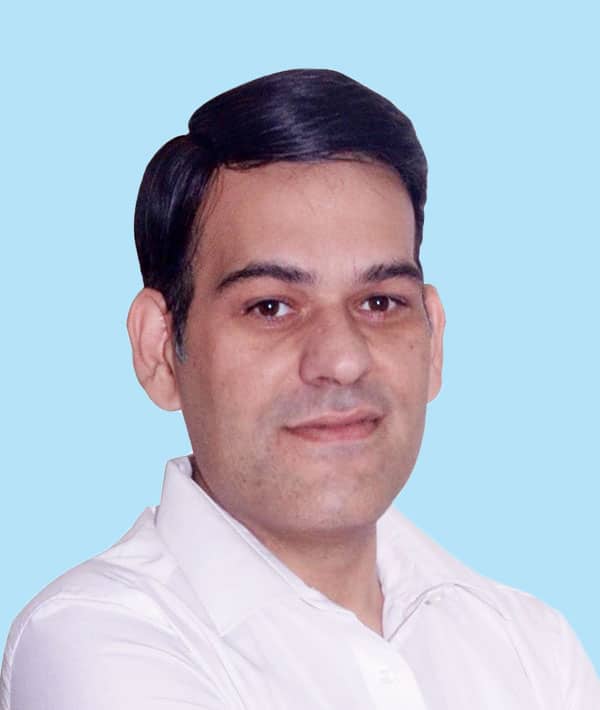

Making back-to-back investments in mobile manufacturing plants has helped Lemon Electronics create headlines in the last few months. In an exclusive interaction with Baishakhi Dutta, senior business journalist, Electronics Bazaar, Kapil Chugh, chairman and managing director, Lemon Electronics, shares the company’s growth strategy. He speaks of how, despite being a new entrant in the smartphone space, Lemon Electronics has ambitious plans to make an impact on the domestic and South Asian markets.
EB: What are the various products that are being manufactured by Lemon Electronics?
Lemon is a ten year old company, currently better known as a feature phone brand with its target market being the people in Tier II, Tier III and smaller cities. After I took over, we started adding different verticals and product lines.
In September 2017 we came up with four smartphone models. Since we have the zeal to expand continuously, we are launching Lemon LED TVs also, and our strategy and target customers remain the same for this product. As a group, we do certain other things too. I have another company called Victronics Communication Pvt Ltd. We have set up a plant called Lemon Mobile Decor, which manufactures mobile accessories that can be used with any phone and not exclusively with Lemon mobiles.
EB: What is the reason behind choosing Tier II and III cities as your target group?
Our aim has always been to build our brand by reaching out to people in the remote areas of the country. Most marketers tend not to go into the interiors of the country because buyers there have less purchasing power. Brands like Oppo, Vivo, Samsung, Apple, etc, are selling smartphones to the niche top-end segment of the market. We decided to reach out to our target segment with a very good configuration at a very affordable price. We design our products to be affordable, which means that my customers can buy a Lemon product for just ₹ 3500, and at the most, ₹ 5000—that too, in the smartphone segment.
EB: How are you expanding your reach amongst consumers?
We have managed to penetrate deep into the retailer segment. The fundamental tenet of any distribution company is that, only if you are visible on the counter will there be a probability of your product being sold.
We have started looking at the exports market also. Last year, we recruited a very professional team for our international business. This February, we got our first order from Nepal, worth about US$ 2 million. So the ball has started rolling.
EB: Please shed some light on the recent ₹ 1.5 billion investment in the new Noida manufacturing unit.
We have acquired land in Noida in Uttar Pradesh for the project. The construction has started and machines have also been ordered. With the opening of this new plant, we will not be just assembling any more. Rather, we will start manufacturing LED TVs.
There are two parts to this project. The first part is the major cost contributor—manufacturing LED TVs. The SMT line will manufacture the PCB boards. Since the country has a major problem of power fluctuations, we have aimed to manufacture our product here in India, for India and build it according to our environment.
The second part of the project will be the upgradation of our existing setup, i.e., adding new equipment, getting a more sophisticated manufacturing unit and increasing capacities. We will manufacture 2G feature phones, 4G feature phones and also smartphones. The commercial date of operation (COD) of the new unit is July 1, 2019.
EB: Do you plan to stop manufacturing feature phones entirely, and reduce the price of smartphones further so that everyone can afford them?
That is our dream—one has to dream to become successful. Practically, things are not that easy. Digitalisation might help this dream come true in the long run. But in the short term, i.e., in the next one to three years, I would say it is not possible to substitute feature phones with smartphones, completely. The reason is that technology is not going to get that much cheaper, and neither will Tier II and III consumers adapt to smartphone usage so soon. The existing gap between what customers in Tier 1 cities want and what their counterparts in smaller towns are comfortable with, is huge.
That apart, Reliance Jio has started high volume manufacturing of feature phones with support from the government, which will undoubtedly force other companies to also do that. The 2G feature phone will slowly get phased out of the system. This is because Reliance is working on the 4G feature phone now, which has put immense pressure on the Chinese technology providers too. We, the mobile manufacturers, are also collectively putting pressure on the ODMs to work out a solution whereby this phone can be available at a cheaper price, in the market. The moment that happens, there will be a complete revolution in the feature phone market. I believe we are about to witness this change in the next three to five years.
EB: You are coming up with an R&D centre in China. Any similar plans for India?
The innovations are happening in China. Creating an R&D setup in India is not a viable proposition as of now—not until the entire ecosystem moves here. However, I see it happening soon, keeping in mind the Indian government’s initiatives like imposing several duties, bringing in machinery, etc. I am immensely grateful to the Indian government for pushing all the mobile manufacturers to start production in India. This has led to huge employment generation in the country.
EB: What is your current share of the India market? With the new plant, what will be your estimated growth in the next five years?
Almost 20 million (2 crore) handsets are being made available in India every month. We make 400,000-500,000 handsets each month, which is around 2 per cent of the market.
The market is expanding rapidly, i.e., around 10-11 per cent annually. So keeping these statistics in mind, our aim is to move from 2 per cent to 5 per cent market share in the next few years. However, five years is a long time in this business and you never know when a Chinese player will come in and change the game.
EB: What are the strengths and weaknesses of the smartphone manufacturing ecosystem in India?
There is no ecosystem for smartphone manufacturing in India. Around 120 components are used in a smartphone, of which India is not able to manufacture even a single one. What we are doing is bringing all these components in the SKD form, and applying screwdriver technology here in India by just assembling the components. Lava is the only company that has started bringing in the PCB board and components separately, and is doing component mounting and wave soldering in the country. It has at least taken the first step towards making a difference. The biggest difference between India and China is that the latter has a specialised ecosystem in this domain. But in India, we are not encouraging such a clustered manufacturing system.
EB: How can the gap in the manufacture of these components be bridged?
I believe that there has to be more encouragement from the government. Those who plan to set up manufacturing plants in India today need to see what support is being provided by the government. The viability of the project will depend on that. Moreover, honest and hard working businesses will look for a protection layer from the government, against imports as well from unfair competition within the country. For instance, they would want all Chinese brands to be asked to buy from them. The day this happens, not only Lemon, but a lot of industries and entrepreneurs, will be ready to be a part of the change.
The problem is that India is a free market and the government is letting the Chinese players eat into this market. Thus, despite putting in their best efforts, Indian brands are not able to succeed.
EB: Tell us about the ₹ 1 billion investment in the new tempered glass manufacturing unit. What is the production capacity in the new unit going to be?
The new tempered glass manufacturing unit in Kundli, Haryana, will be launched under a new sub-division called Lemon Glass India Limited. It has taken the legal rights from Thailand Glass Company for the procurement of raw materials as well as for distribution in India. The plant will start operating from September 2018. With an estimated investment of ₹ 1 billion, the unit is expected to produce over 20 million mobile phone tempered glass screen covers per month. We look forward to creating separate distribution channels for tempered glass, in different states.