
Tessolve will support Intel Foundry customers globally by providing package design and simulation services
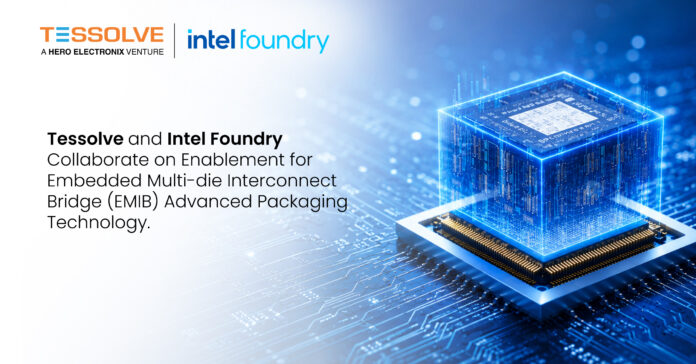
Tessolve has announced a collaboration with Intel Foundry to support package designs based on Embedded Multi-die Interconnect Bridge (EMIB), Intel’s advanced packaging technology designed for heterogeneous multi-chiplet architectures.
Under the collaboration, Tessolve will support Intel Foundry customers globally by providing package design and simulation services. The company said it has already completed an end-to-end project involving package design and simulations, which helped it gain practical expertise in EMIB technology and accelerate its qualification process.
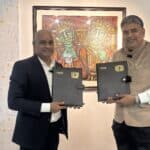
Srini Chinamilli, Co-Founder and CEO of Tessolve, said the collaboration combines Intel Foundry’s EMIB technology with Tessolve’s end-to-end capabilities across the semiconductor value chain, enabling the company to expand its offerings for Intel Foundry customers.
Vic Vadi, Vice President, Ecosystem, Foundry Services at Intel Corporation, said the collaboration aims to combine Tessolve’s expertise in chip architecture, design, test development and embedded systems with Intel’s advanced package design and test technologies to provide customers with end-to-end solutions for increasingly complex electronics designs.
EMIB is Intel’s die-to-die interconnect technology that supports low-pitch bump connectivity, High Bandwidth Memory (HBM) integration, and compatibility with the Universal Chiplet Interconnect Express (UCIe) standard. The companies said the collaboration is intended to help reduce development costs, mitigate design risks, and accelerate innovation in next-generation semiconductor products.
Tessolve said it has invested in 11 semiconductor test and embedded laboratories worldwide to strengthen its engineering and test capabilities. The company also noted that it secured $150 million in funding from TPG in September 2025 to expand global delivery centers, enhance advanced test labs, and pursue strategic acquisitions aimed at strengthening its position in the global and Indian semiconductor ecosystem.