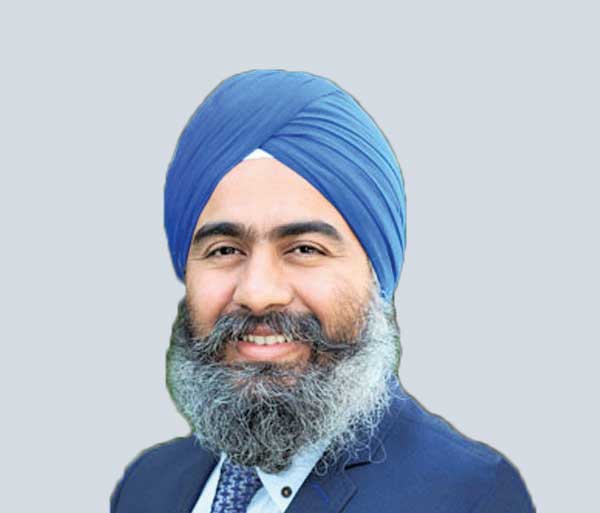


Connected and cognitive technologies are transforming India’s digital world at a tremendous speed. In a conversation with Paromik Chakraborty from the EFY Group, Ajit Singh, senior vice president and head – communications and devices BU, Sasken Technologies, shares his views on the impact of such technologies on India’s ecosystem and how advanced communication networks like 5G are leading us towards a smarter future.
EB: How have product development processes changed with technologies like IoT and AI?
For an IoT solution to work, each of its components must be integrated well into it. The right platform, which has intelligence built into the semiconductor unit, must be used. And the right kind of analytical engine must be built into the edge device and the aggregation device. Also the right bandwidth and links must be available. So, it is important to focus on integrating all the constituents – the hardware, the network and connectivity, as well as the engines – during the product development process.
EB: What is the adoption rate of such technologies among businesses in India?
In India, technologies like AI, ML and data analytics were adopted early in the e-commerce space. Industries like manufacturing, mining and utilities are doing a lot of pilot work now. For instance, a smart mining program was launched a few years ago to figure out how to improve the safety for miners. This program provides connectivity to a central remote data centre, which can continuously monitor what’s happening in the mines. Over the last few years, several industries have started doing pilot programs with IoT and AI. Consumers are also investing in smart home devices, thus promoting the use of these technologies in households.
EB: In what way can solutions providers in the Indian IoT and telecom space improve?
Telecom service providers will play the most important part in this ecosystem because only they can take the solution to the end customers. From an operator’s standpoint, there are no longer enough margins for voice-only services. The launch of Reliance Jio solutions on a low-cost platform has created a price war in the country – to the extent that voice services are more or less given free of cost today. Hence, it’s the advanced applications that will drive revenues and profits for the operators.
Moreover, to simplify operations for both enterprises and consumers, billing for these services has to be routed through existing channels. As an enterprise or domestic user, an electricity bill or a telephone bill ought to be sufficient to ride on an IoT application.
EB: How are technologies like 5G set to shape the future of communications in India?
India is home to the largest number of smartphone users in the world. With the advent of IoT, the number of devices that are coming onto the network has also increased and will keep on rising. Globally, it has been projected that the number of IoT devices has surpassed the number of users. Edge devices are getting fairly intelligent, pushing back a larger amount of data into the central data centre. Automated cars will also become mainstream in a few years, where a lot of communication will happen. So, imagine the amount of data that will flow in the future—there will soon be a data tsunami! Networks need to be sturdy and have sufficient speed to be able to cater to this. This is where technologies like 5G are needed. In India, 5G is going to be adopted at the same time as in the whole world.
EB: Does India’s communications ecosystem have enough depth to drive the 5G rollout?
Stalwarts in the network industry like Nokia, Samsung and many others have established setups in India. Government policies in India are also improving day by day, with many recent ones designed to help the industry grow faster. The ecosystem is good and the demand is high. If any company wants to launch any solution pertaining to these technologies, they can be sure that the demand will be enough to ensure their return on investment. It’s all falling into place. Companies like ours, which have been a part of the 3GPP structure since a long time, have immense knowledge about communication protocols and we are using this for our global customers—to help them develop their next generation of products.
EB: So the 5G infrastructure is ready to be rolled out in India?
It’s a work in progress – and not only in India, but across the globe. For instance, despite the US being the most advanced market, it has not started providing 5G on a large scale. Only one or two players like Verizon are offering 5G there. I think 5G will be available to everyone across India in another two years. We are not too far away from that day.
EB: How are the government and various other institutions promoting the adoption of such technologies?
The government has come up with policies and launched some initiatives last year. For instance, NITI Aayog has set up an AI task force. India is a country where, historically, industries have grown by themselves wherever there was a business need or demand.
However, for these technologies, perhaps something more could be done at educational and academic institutions. More focus should be on creating talent that can be incubated. Colleges should set up programmes that are tuned towards newer technologies rather than aiming to produce basic software engineers for the IT world (a field that is already saturated). The educational curriculum needs to be adapted and fine tuned to create the largest AI, IoT and machine learning competencies in the entire world.
EB: What challenges in the ecosystem does Sasken aim to address?
Sasken has been in product engineering, solutions and services for close to about 30 years now. We found a gap in the digital transformation movement—most of the digital solutions that people were talking about pertained to IT and there were not too many players ready to work hand-in-hand on the product engineering side. This is where we found an opportunity and came up with a solution, which we call ‘chip-to-cognition’. Right from the semiconductor level of engineering to the level of cognitive learning, Sasken provides solutions to its customers.
EB: Which industries does Sasken cater to and how active are you in India?
The main markets that we address are semiconductors and communications. In the last few years we have built solid traction with the automotive industry. India is a part of our global market. Whatever we create for the global markets, we design for India as well.
EB: Tell us about your future projects and your roadmap going forward as an organisation?
We have set up a Centre of Excellence that incubates a lot of new solutions using fresh talent coming out of engineering schools. We are investing in incubating solutions around technologies like AI, machine learning, 5G, etc. We are essentially trying to keep the key ingredients ready so that if customers want any kind of product or solution, we can help them accordingly. All the leading semiconductor companies are our customers and have been so for more than a decade; so our exposure to verticals like automotive, industrial, cognition, etc, keeps us abreast with what is happening in all these markets. Sasken is investing in many of these areas.